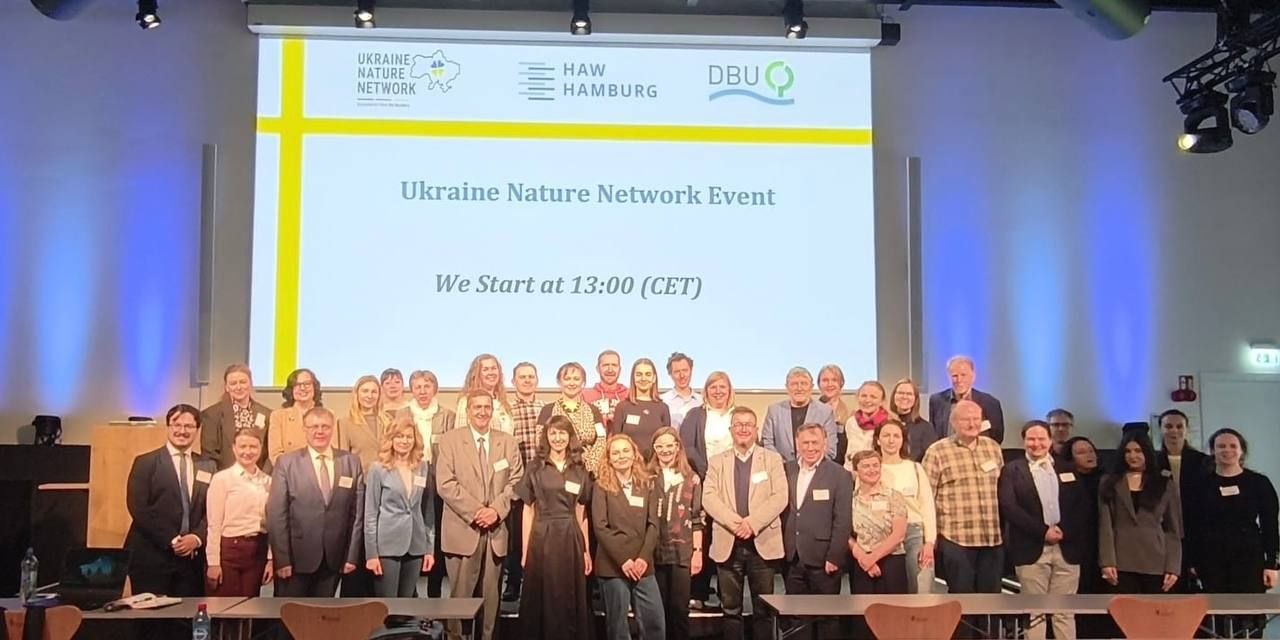
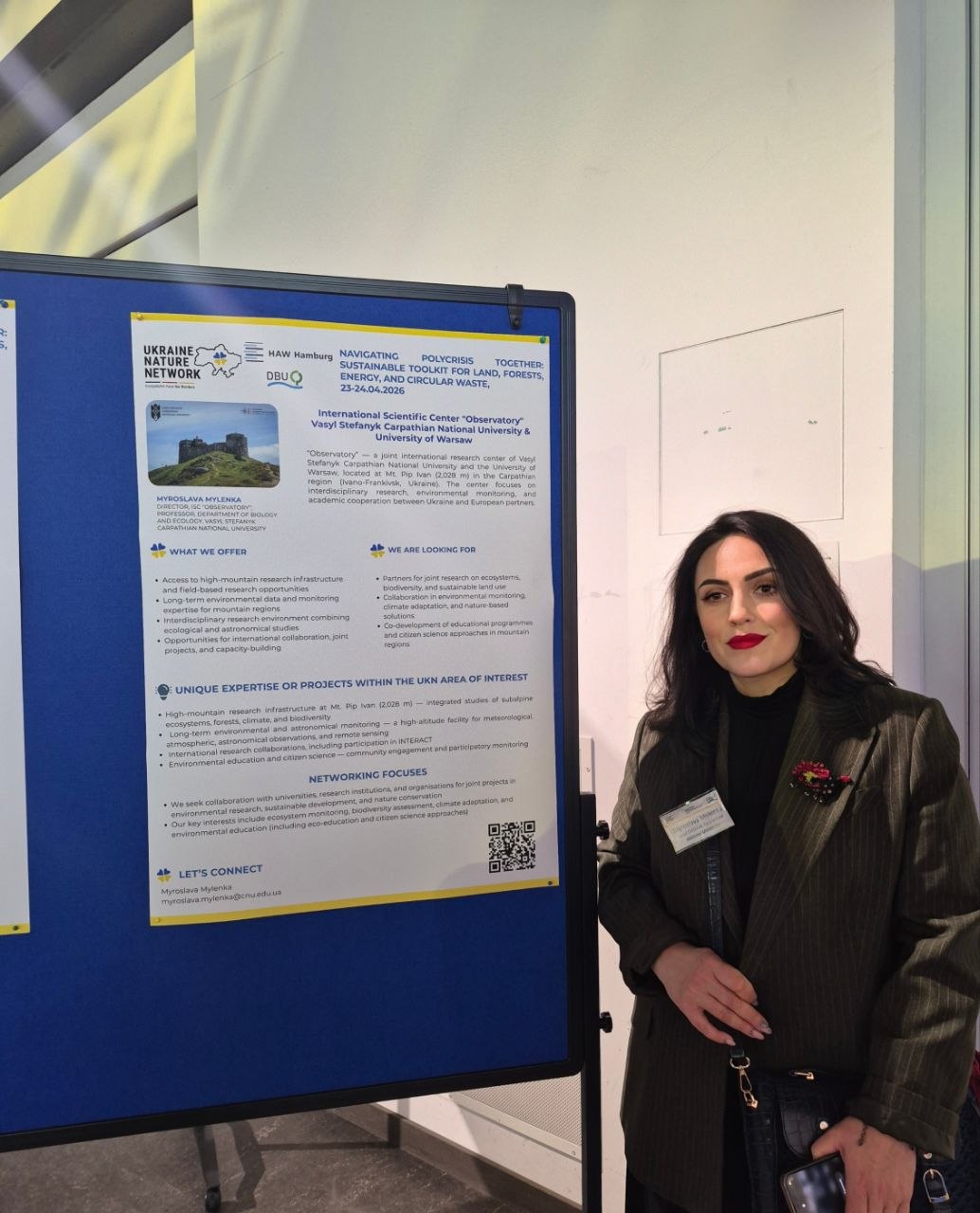
Myroslava Mylenka, Director of the International Educational and Scientific Centre “Observatory” of Vasyl Stefanyk Carpathian National University, participated in the international scientific and practical event “Navigating Polycrisis Together: Sustainable Toolkit for Land, Forests, Energy and Circular Waste”, which took place on April 23–27 in Hamburg at the Hamburg University of Applied Sciences.
The event is organised in collaboration with the European School of Science and Research on Sustainable Development (ESSSR), the Interuniversity Sustainable Development Research Program (IUSDRP), and the European-North American Sustainability Research Consortium (ENASRC), with the support of the Nature Network of Ukraine.
The event showcased the activities of the International Scientific Centre “Observatory” as a unique high-altitude research infrastructure in the Ukrainian Carpathians. Special attention was paid to the development of the Observatory as an interdisciplinary scientific hub that combines climate, environmental, and astronomical research, and to its integration into European scientific networks.
During the poster session and working meetings, the key areas of the Observatory’s activities were presented, in particular, high-altitude ecological and climate monitoring; research into the biodiversity of mountain ecosystems; development of citizen science; and formation of international educational and research programs.
Particular emphasis was placed on the Observatory’s potential as a platform for international cooperation in climate change adaptation, sustainable management of natural resources, and the development of mountain areas.
Participation in the event also included expert discussions and exchange of experience with scientists and practitioners from different European countries on overcoming the challenges of the so-called “polycrisis” – the complex interaction of environmental, energy, and socio-economic processes.
Separately, during the event, the experience of implementing a scientific and practical project to assess the impact of military actions on natural ecosystems was presented. In particular, it focused on the state and transformations of partner nature reserves, including the Kamyanskaya Sich National Nature Park. The focus of the discussion was the analysis of environmental risks, the potential mutagenic effects of pollution, and approaches to the further restoration of natural complexes in the post-conflict period.
The speeches and discussions also emphasised the key role of territories and objects of the nature reserve fund in ensuring the ecological stability of the Carpathian region. It was emphasised that it is the network of protected areas that performs the functions of a natural buffer, supports biodiversity, regulates water balance, and promotes adaptation to climate change, which are critically important in the context of modern environmental and security challenges.
The university’s participation in this event contributes to strengthening international cooperation, expanding the partner network, and integrating Vasyl Stefanyk Carpathian National University into the European scientific space of sustainable development.