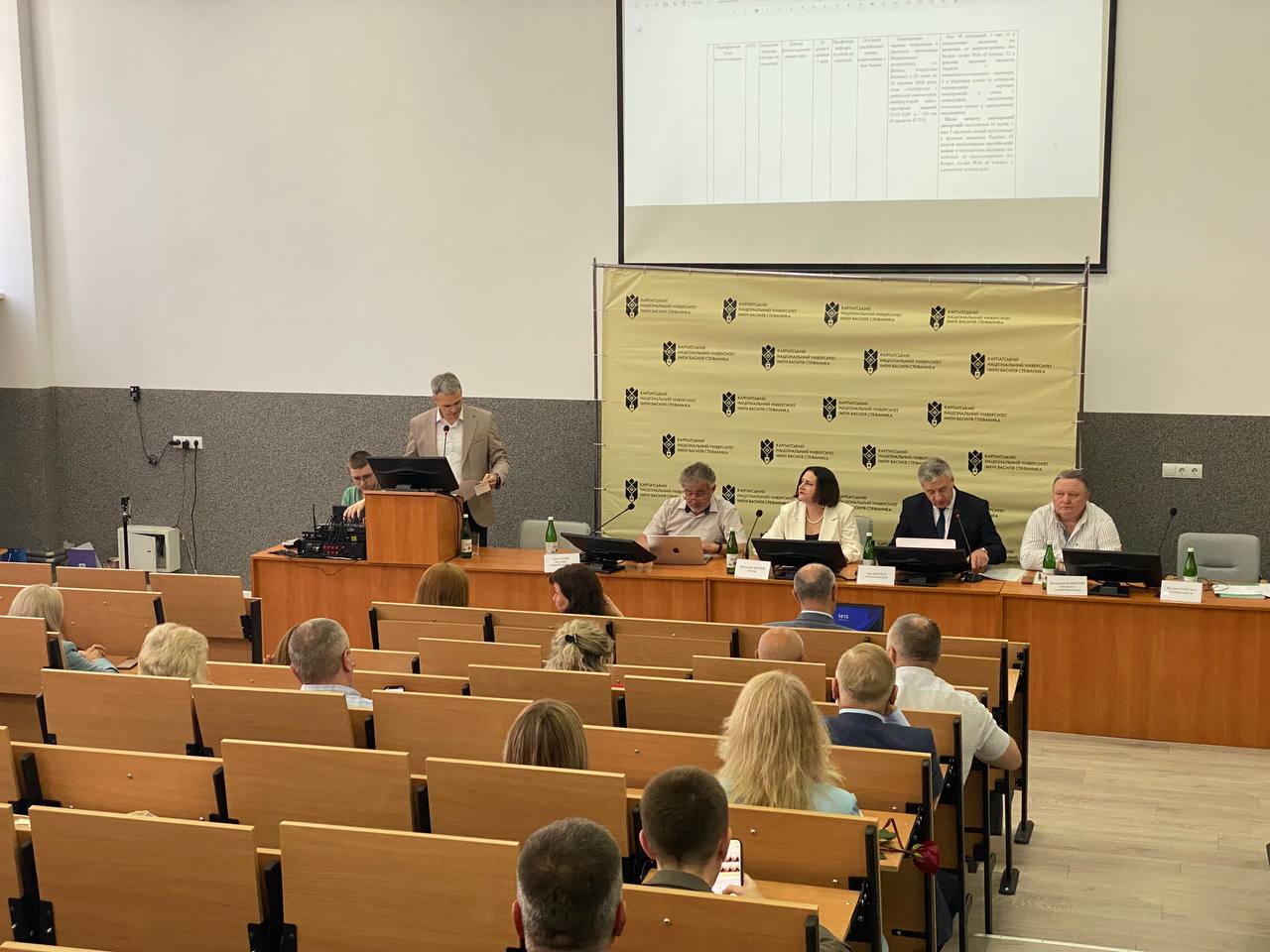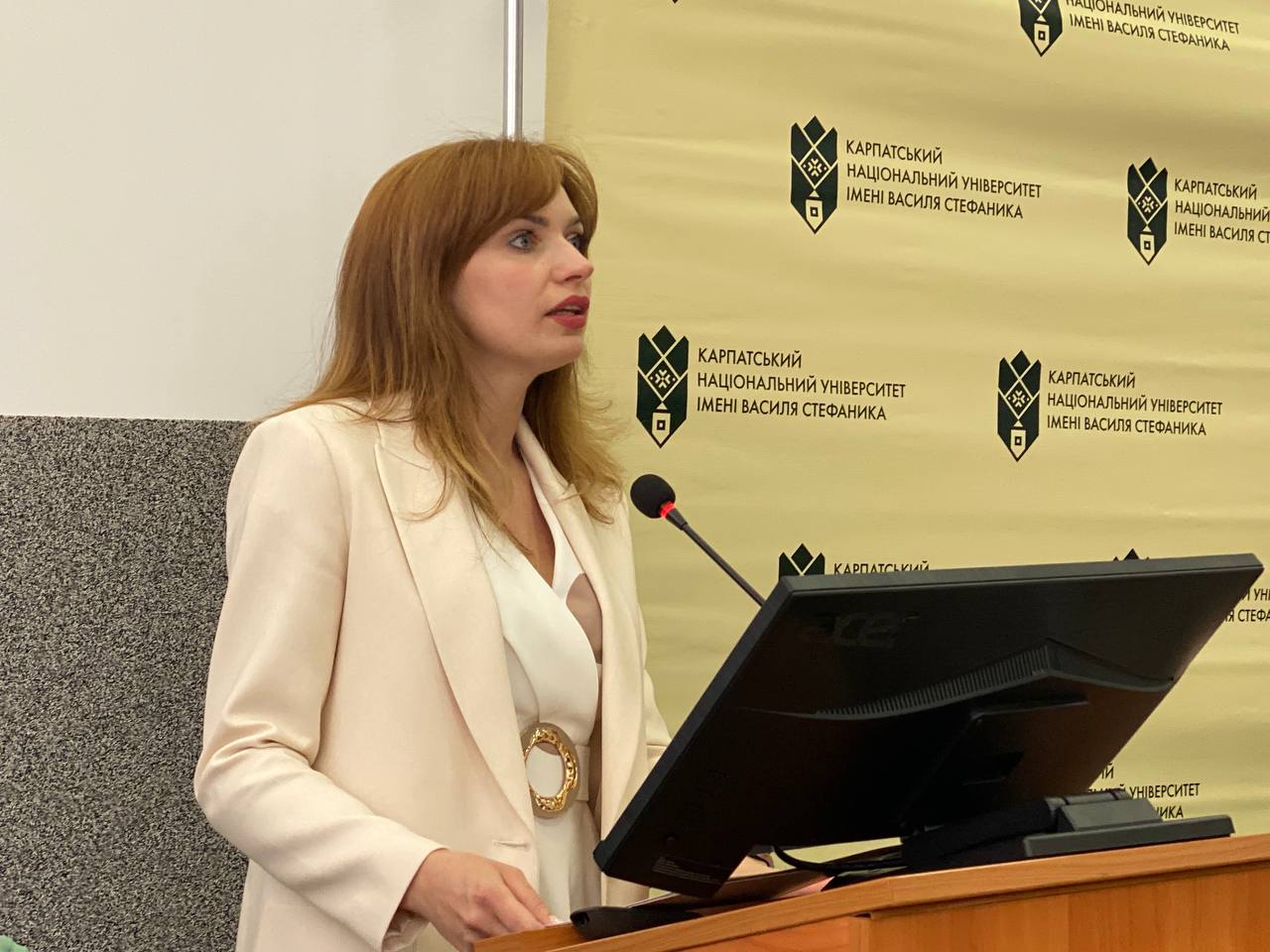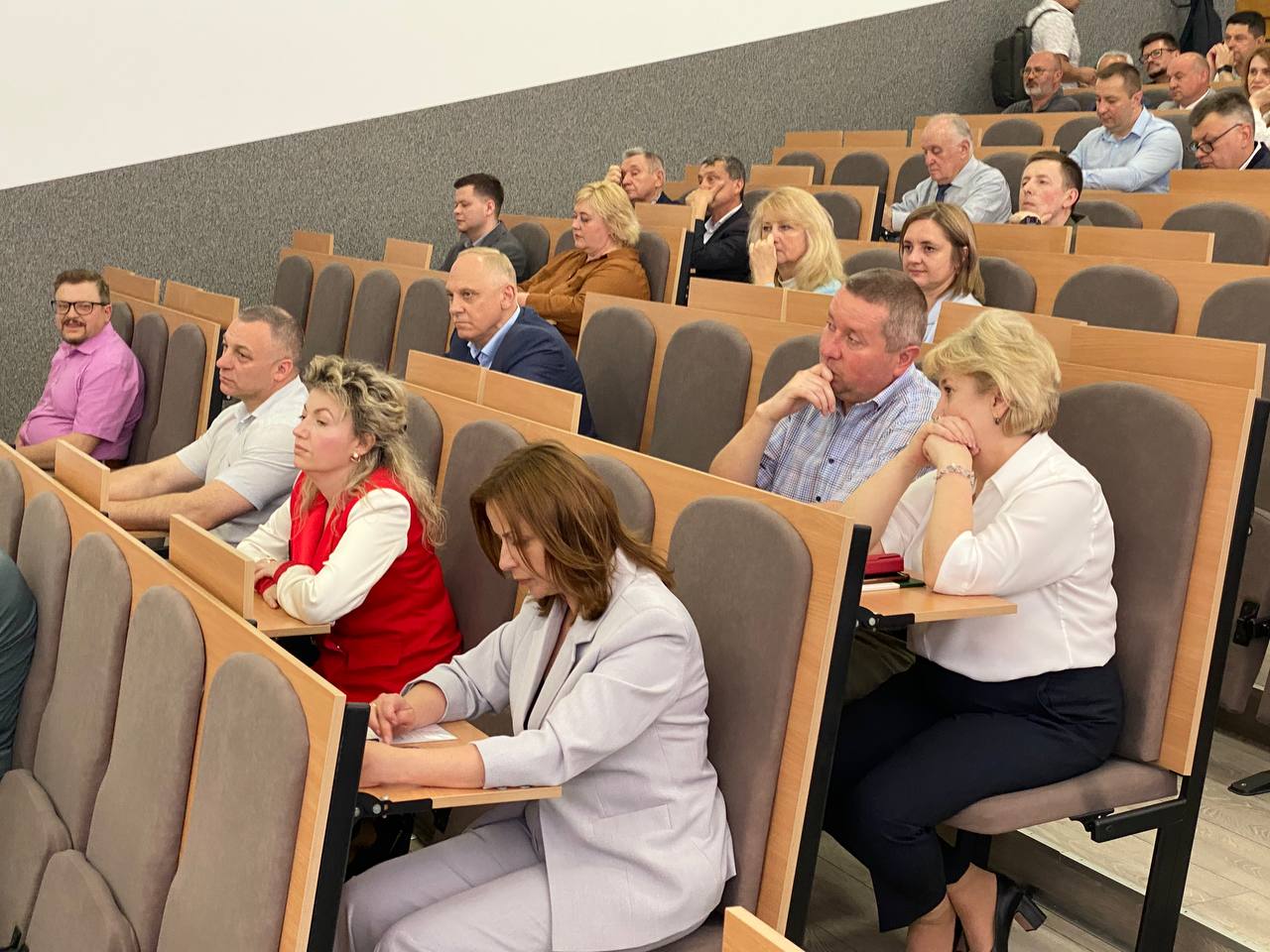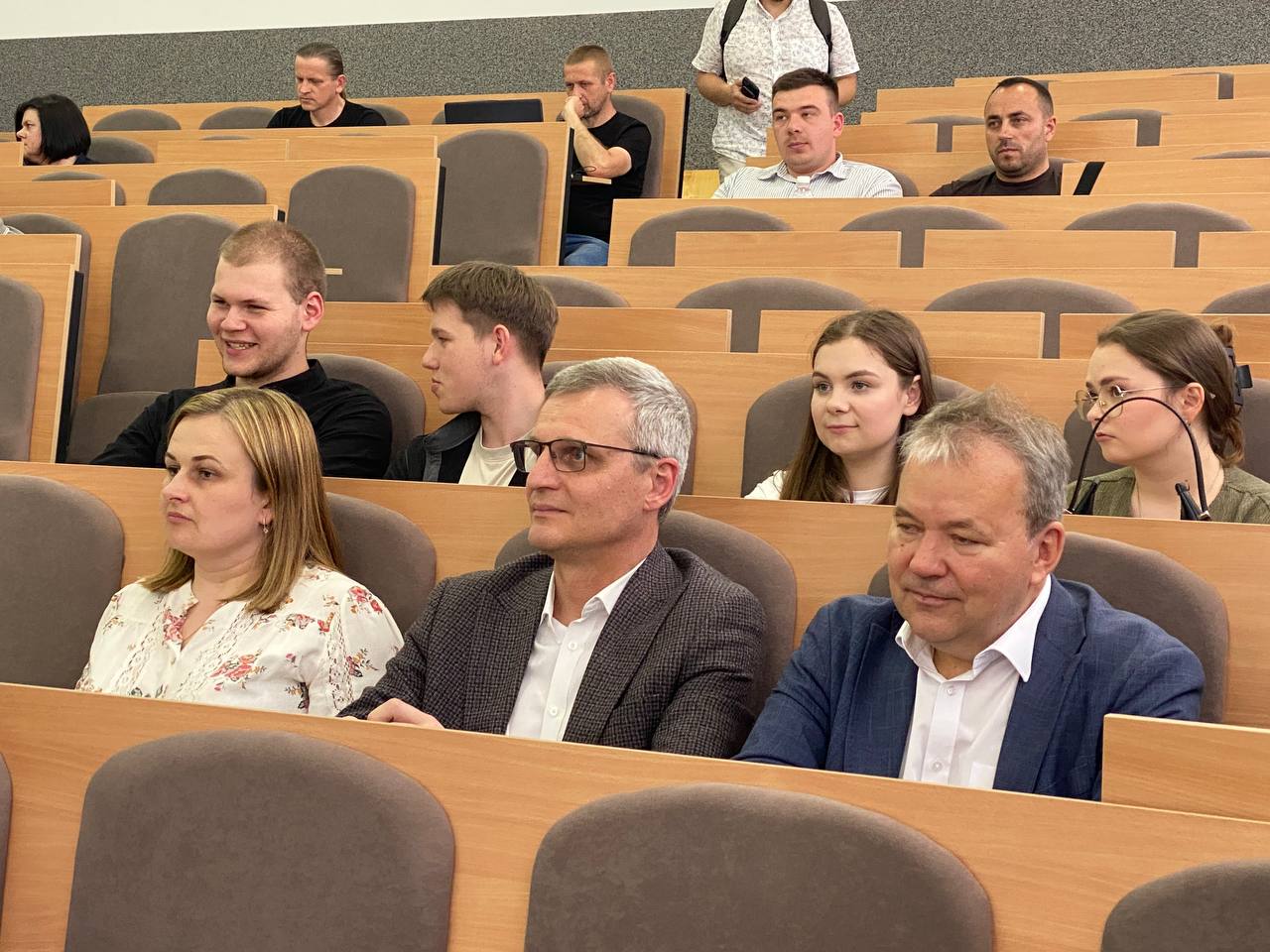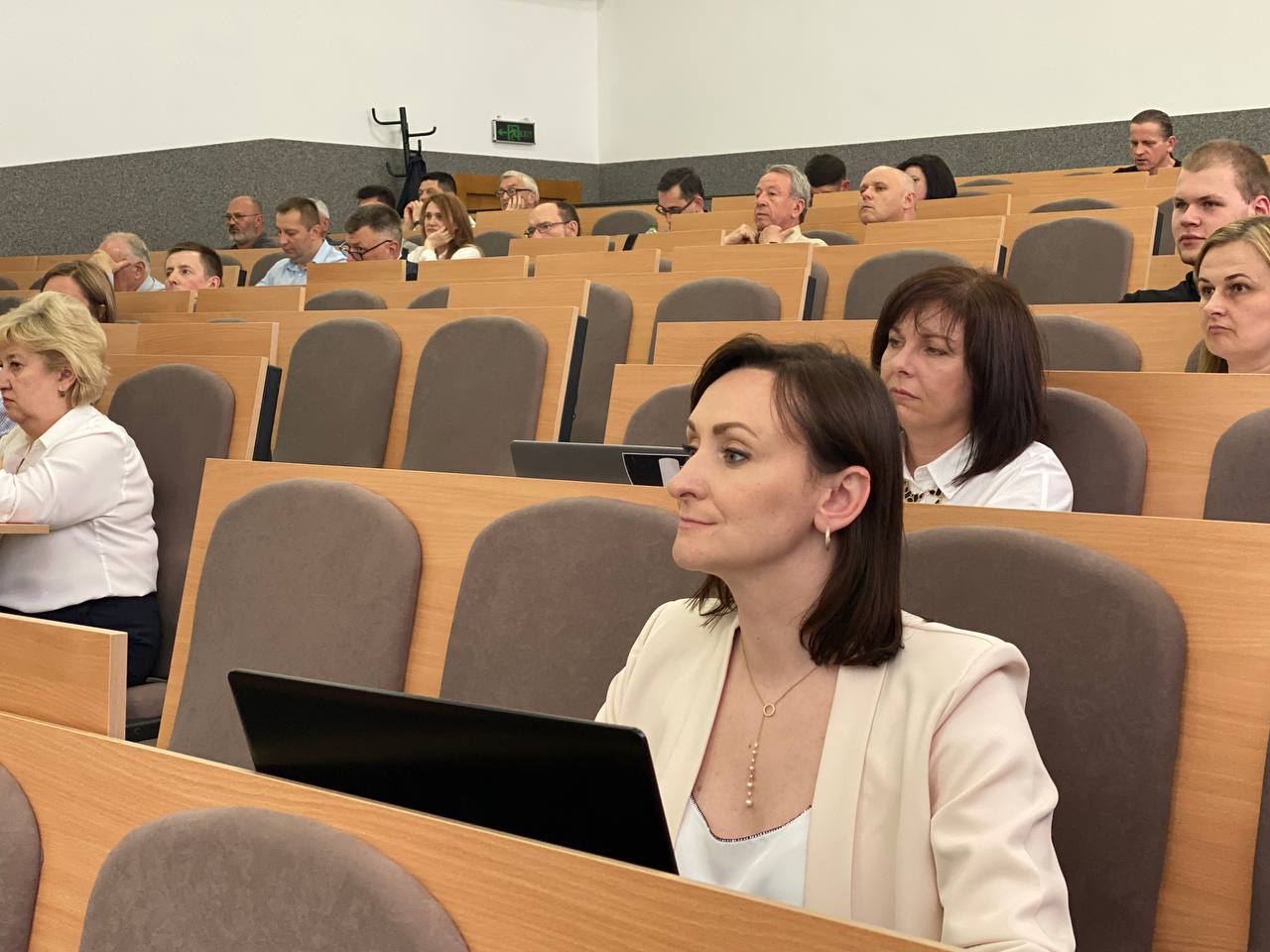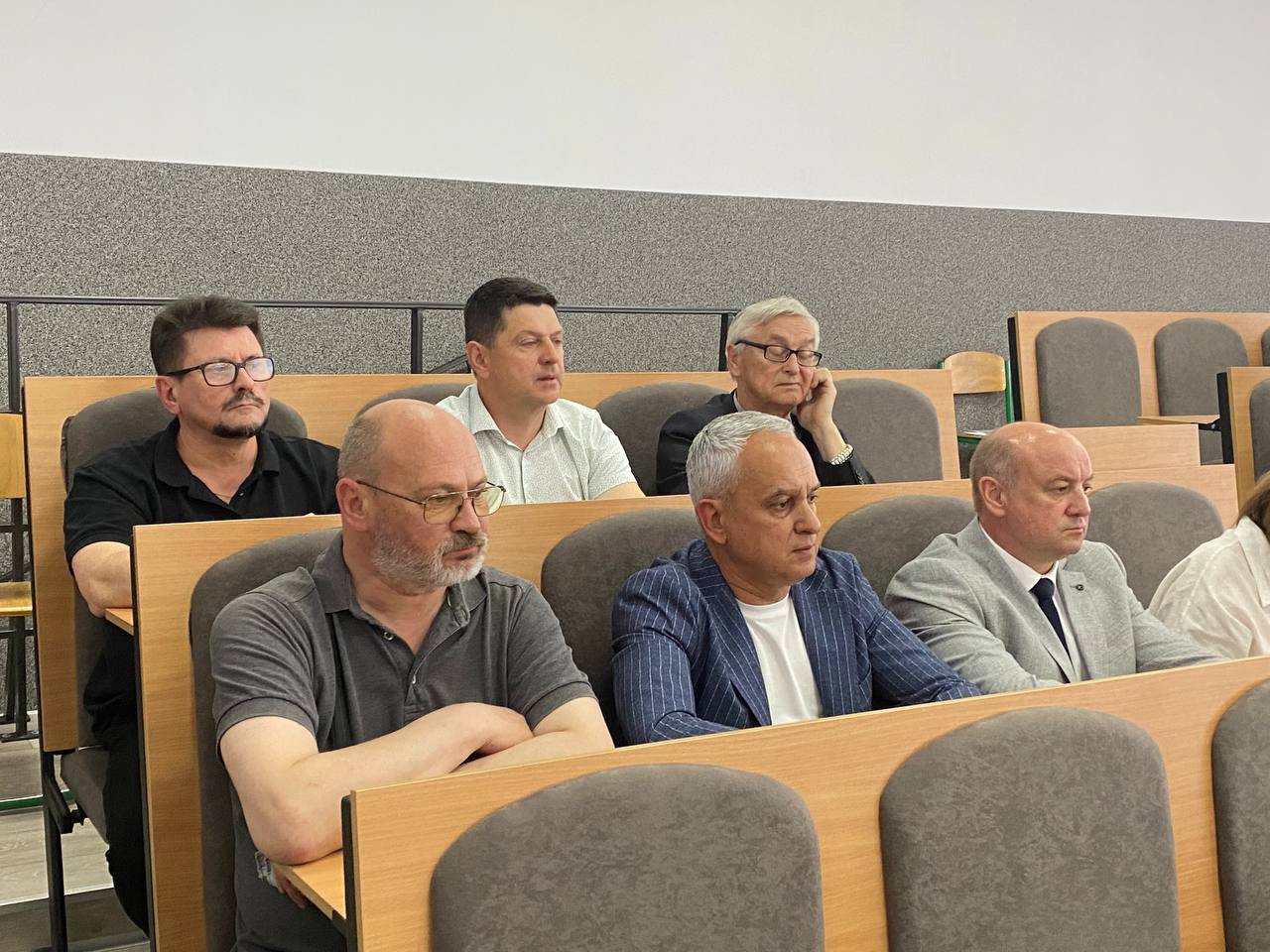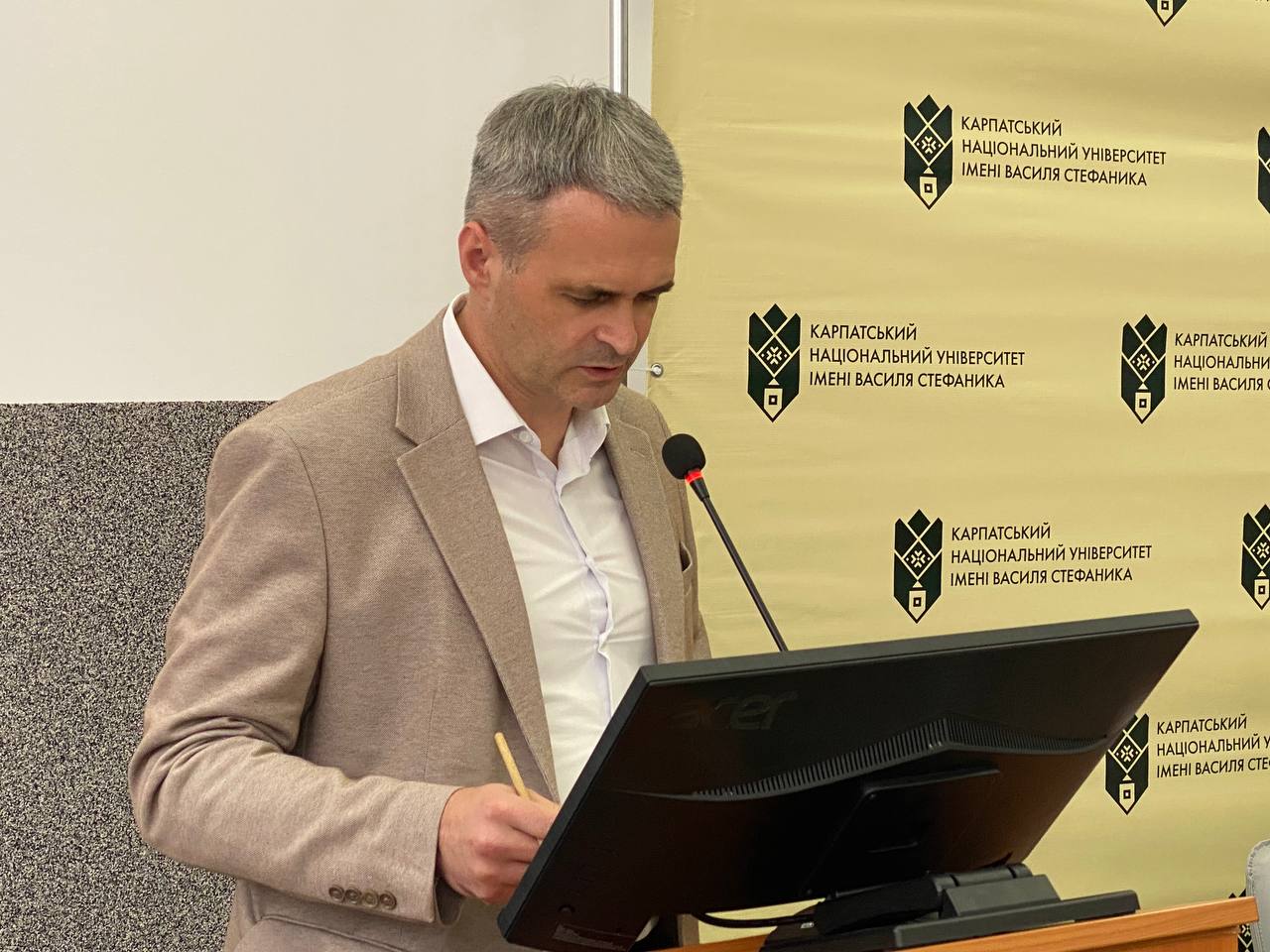
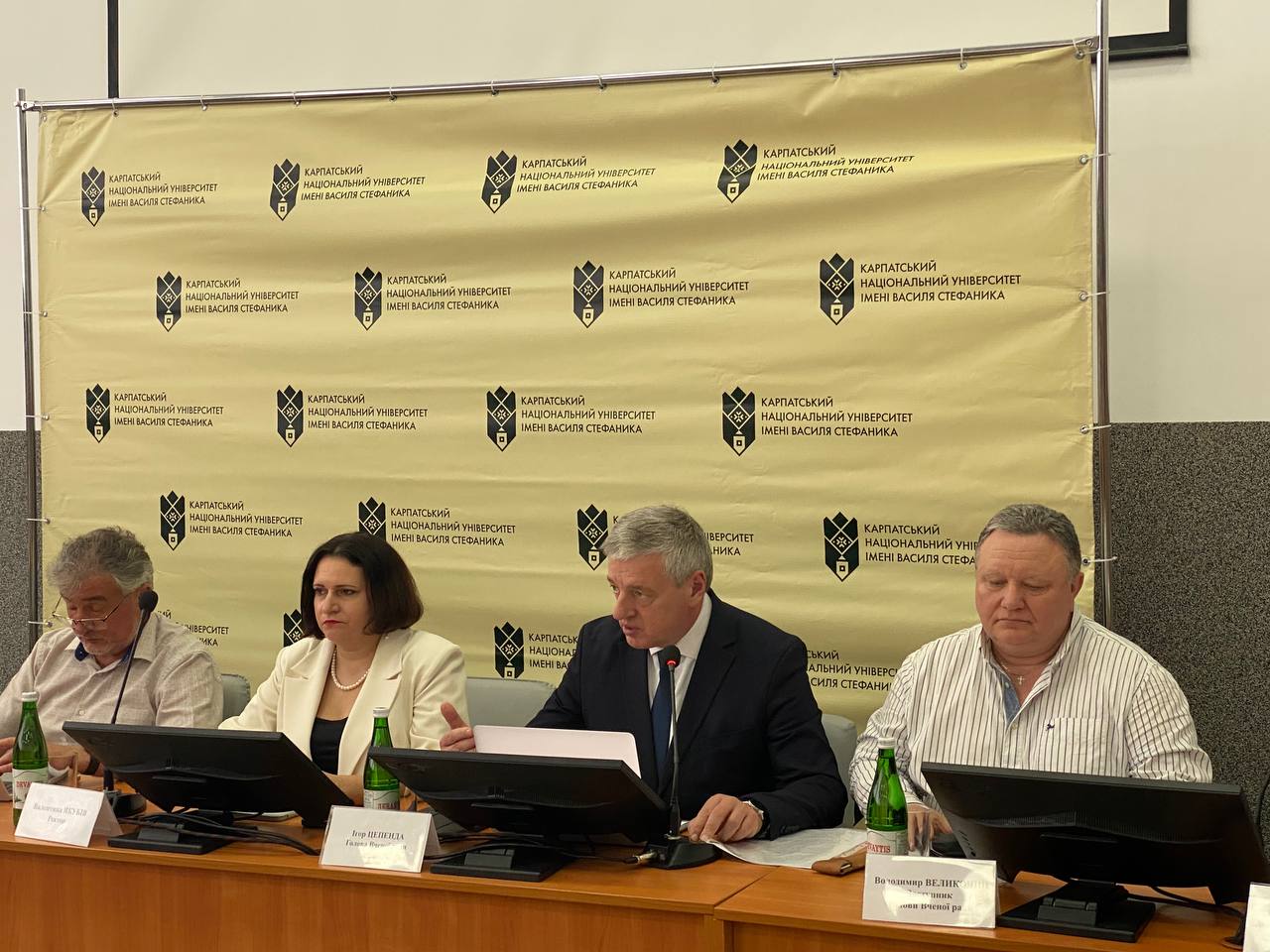
Today, a meeting of the Academic Council was held at Vasyl Stefanyk Carpathian National University, chaired by Igor Tsependa and attended by the management and teaching staff.
During the meeting, we considered several issues in accordance with the agenda.
Vice-Rector for Scientific and Pedagogical Work, Associate Professor Nataliya Belova, presented the competition for vacant positions and the results of the university’s accreditation activities for educational programs in the 2025/2026 academic year.
Vice-Rector for Scientific and Pedagogical Work, Associate Professor Vitaliy Shkromyda, reported on the awarding of academic titles.
The participants of the meeting paid special attention to the issue of using neural networks in the university’s educational process, the results, challenges, and prospects of which were presented by the head of the permanent commission on educational and methodological work, Professor Lyubov Prokopiv.
After listening to and discussing the information, the Academic Council noted that artificial intelligence technologies have already become an integral part of the university’s educational, methodological, and managerial activities.
It was stated that the university has established a regulatory framework to implement a policy on the responsible use of artificial intelligence technologies in the educational process, scientific, innovative, and managerial activities. It provides for a combination of university-wide regulation with local responsibility of faculties, educational and scientific institutes, departments, guarantors of educational programs, scientific and pedagogical workers and students in determining the permissible limits of the use of AI within educational components, individual tasks, practices and final forms of control.
The university has also developed and implemented a “Policy on the Responsible Use of Artificial Intelligence Technologies”, which defines the purpose, objectives, principles and areas of application of AI, as well as requirements for academic integrity, ethical aspects, rules for declaring the use of artificial intelligence and protecting personal data and confidential information. The document is based on a human-centred approach and on the principles of transparency, accountability, academic integrity, and the responsible use of data.
The Academic Council emphasised that the use of neural networks is an important factor in transforming educational content, scientific activity, and academic culture. They can contribute to improving the quality of the educational process, updating teaching and learning materials, developing tasks of varying complexity, creating visualisations and presentations, preparing test materials, supporting academic writing, translation, text editing, and information analysis. At the same time, it was emphasised that the use of such technologies must be accompanied by critical human verification of the results, preserving the author’s contribution and adhering to the principles of academic integrity.
It is also emphasised that no artificial intelligence technology can replace human thinking, scientific creativity, professional responsibility, or the university’s educational mission. The use of neural networks should be based on the principles of human-centeredness, critical thinking, and the preservation of the author’s contribution across all types of educational, scientific, and managerial activities.
Separately, the Academic Council identified the need for further development of practical mechanisms for implementing the relevant policy, in particular: conducting internal monitoring of the use of neural networks, creating a working group to prepare university recommendations, including provisions on the use of AI in syllabi and work programs, introducing a unified declaration model, updating the criteria for assessing learning outcomes, preparing methodological recommendations, conducting educational and methodological seminars, and annually reviewing the policy taking into account technological and pedagogical changes.