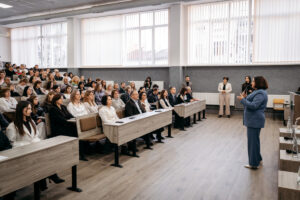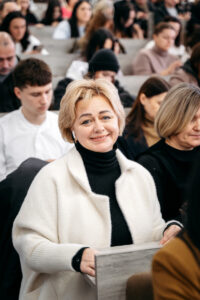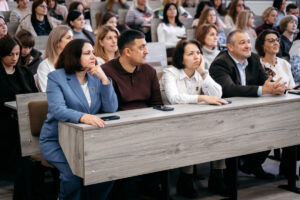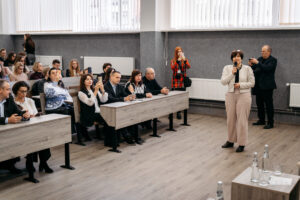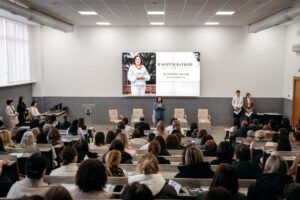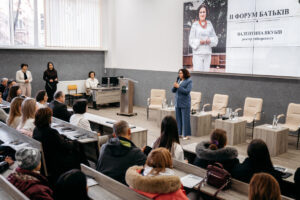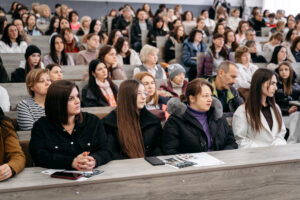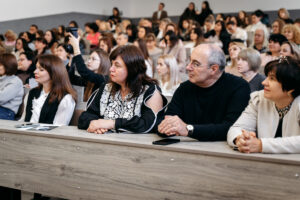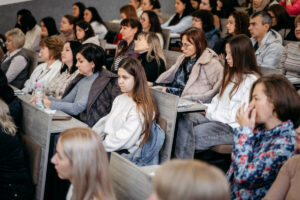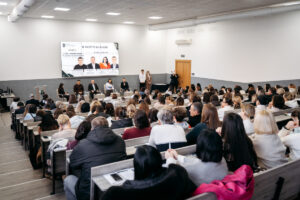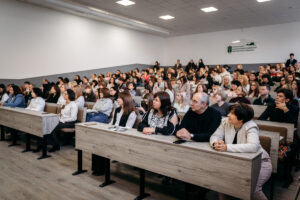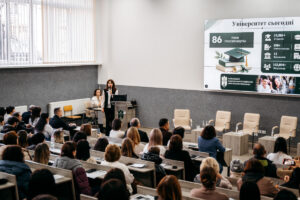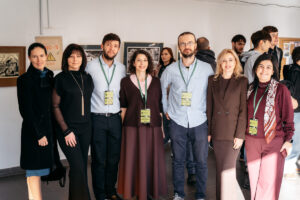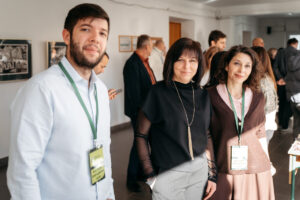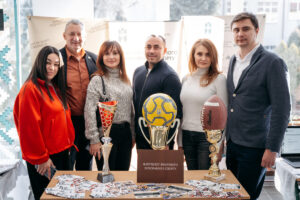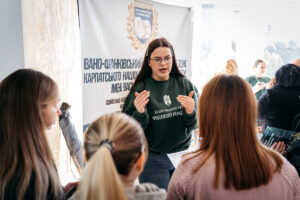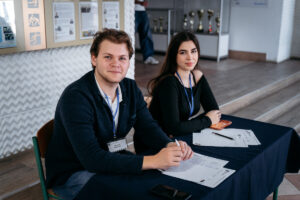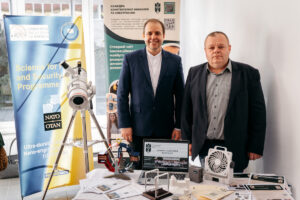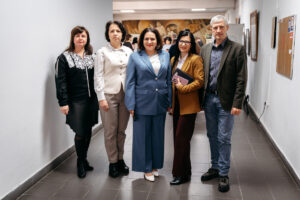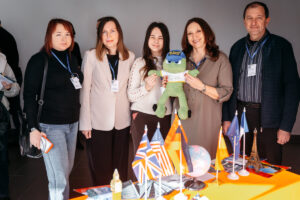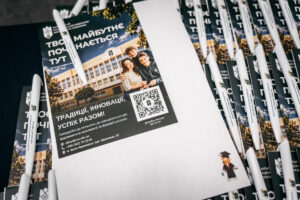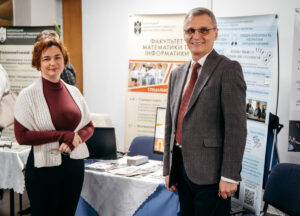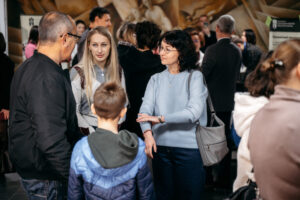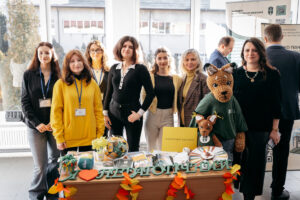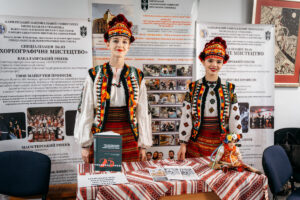
The II Parents’ Forum was held at Vasyl Stefanyk Carpathian National University. This large-scale meeting brought together parents, educators, representatives of local governments, employers, students, and the university community for an open dialogue about the future of the younger generation.
This is more than just an event. The forum is a space for mutual understanding, sharing experiences, and building partnerships among those interested in quality education, professional development, and the successful self-realisation of young people. Participants had the opportunity to discuss important issues of professional self-determination, conscious choice of educational trajectory, adaptation to the modern labour market and preparation of children for independent adult life.
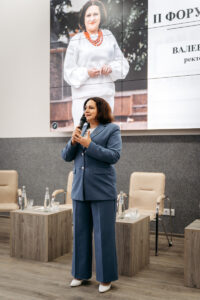
The university’s rector, Valentyna Yakubiv, addressed the audience with a welcoming speech. She emphasised the special responsibility that parents and educators bear today, helping young people decide on their future, as well as the importance of the partnership between the family and the higher education institution.
The rector noted that choosing a profession and university is one of the important life steps that requires not only thorough consideration, but also support, trust, and understanding of the child’s abilities and aspirations. At the same time, modern education is not limited to acquiring professional knowledge: it should help a young person develop critical thinking, responsibility, communication skills, the ability to learn throughout life, and confidently respond to changes. Valentyna Yakubiv emphasised the university’s openness to cooperation with parents, because the joint work of the family and the university community creates a reliable foundation for the successful professional and personal development of students.
The first block of the forum — “The Future through the Eyes of Children and Parents” — was dedicated to finding a common understanding of how parents and high school students see the professional future of young people. Using an interactive survey, participants were able to express their own expectations, views, and concerns about their children’s future profession. A comparison of parents’ responses with the results of a survey of high school students added special meaning to the discussion. This made it possible to see how much the ideas of the two generations coincide, what the differences are, and why it is so important to listen to each other when making decisions that will determine the future life path of a young person.
Liliya Midak, director of the Centre for Innovative Teaching Methods, spoke about modern educational approaches, innovative teaching methods, and the opportunities they open up for the development of students.
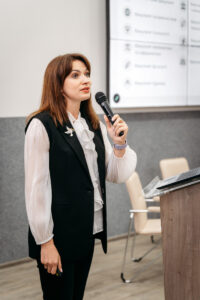
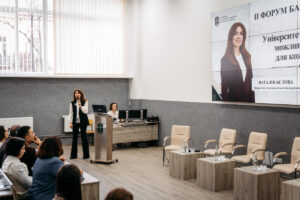
The Vice-Rector for Scientific and Pedagogical Activities, Natalia Belova, informed about the achievements and prospects of the university’s development. She familiarised the participants with the results of the institution’s activities, its educational opportunities, academic and scientific achievements, and the university’s position in the national educational space. Special attention was paid to how the university develops, responds to modern challenges and creates conditions for high-quality training of competitive specialists.
The speech by the Vice-Rector for Scientific and Pedagogical Activities, Eduard Lapkovsky, was devoted to the practical issues of admission to a higher education institution. He acquainted parents in detail with the features of the admission campaign, the main stages of admission, submission of applications, determination of priorities, formation of rating lists and enrollment. He also presented the work of the university’s admissions committee, spoke about the support and consulting support for applicants and answered relevant questions that arise from parents when preparing their children for admission.
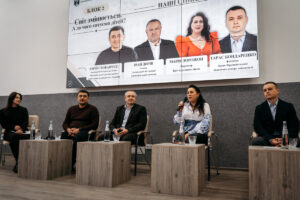
The second block of the forum — “The world is changing. What are we preparing children for?” — became a platform for a conversation about the transformation of the modern labour market, new professions, relevant competencies, and the role of education in preparing young people for the challenges of the future.
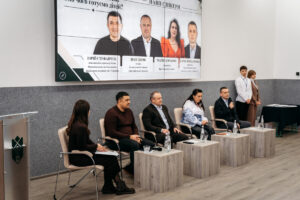
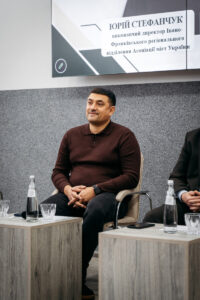
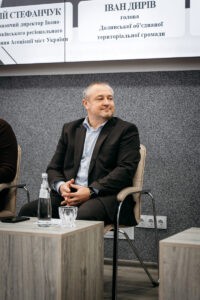
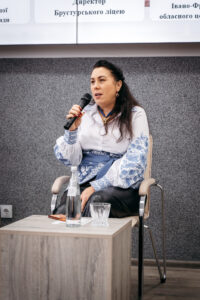
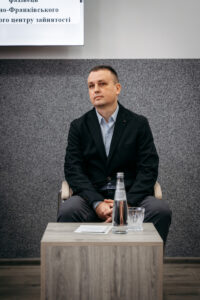
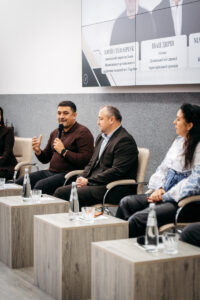
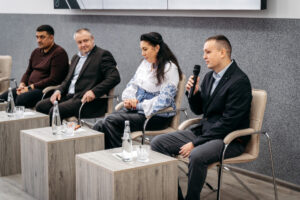
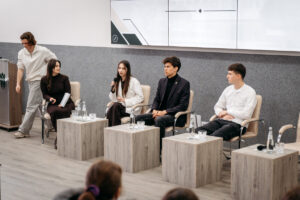
A meeting with representatives of local governments, the education sector, and the labour market took place as part of the panel discussion. The discussion was joined by Yuriy Stefanchuk, executive director of the Ivano-Frankivsk regional branch of the Association of Ukrainian Cities, Ivan Dyriv, head of the Dolyna United Territorial Community, Maria Dorozhon, director of the Brustursky Lyceum, and Taras Bondarenko, specialist of the Ivano-Frankivsk Regional Employment Centre.
The discussion participants focused on how the requirements for specialists are changing, which professional areas will have prospects in the future, and what knowledge and skills need to be developed in children today. They also discussed the relationship between education, the needs of communities, and the demands of employers, the importance of practical experience, flexibility, responsibility, communication, and readiness for continuous professional development.
An important component of the conversation was the realisation that modern education should not simply prepare young people for a specific position, but also develop the ability to adapt to changes, make independent decisions, and find opportunities to realise their own potential.
The third block, “Stress-Free Admission: From Questions to Solutions,” attracted particular attention. Its goal was to help parents better navigate the admissions campaign, get answers to practical questions, and understand what support future applicants can count on.
Eduard Lapkovsky not only spoke about the main stages of admission, but also presented the tools that the university uses for information support for applicants. In particular, the participants were shown an AI consultant – a modern digital tool designed to help applicants quickly find answers to questions related to admission and educational opportunities at the university. After the presentation, parents had the opportunity to ask questions and receive clarification on relevant aspects of the admission campaign.
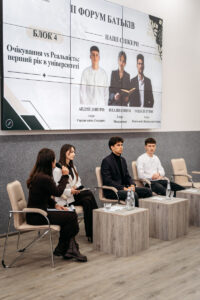
Another important topic was young people’s adaptation to student life. In the fourth block — “Expectations vs Reality: The First Year at University” — there was an interactive session in which students shared their experiences of transitioning from school to the university environment.
Participants had the opportunity to see student life from the perspective of those who had recently gone through the process of adapting to new conditions, getting acquainted with university opportunities, building relationships with classmates and teachers, and learning to independently plan their time and be responsible for their own decisions. This format allowed parents to understand better the expectations, difficulties, and new opportunities that first-year students face, and to recognise the importance of supporting their children during this period of change.
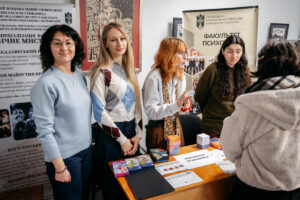
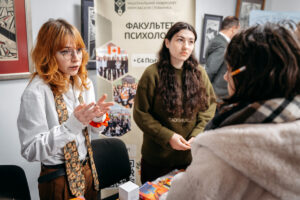
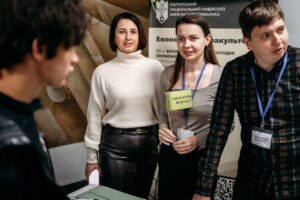
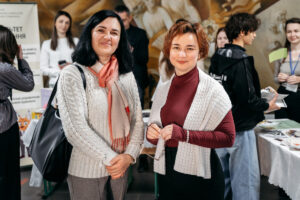
The forum continued with the practical part, “University in Action”. Participants toured the faculty locations, where parents could see the university’s educational environment up close, learn about its material and technical capabilities, educational spaces, and training areas. This gave us the chance to hear about the university and experience the atmosphere of an institution where their children can receive higher education, develop, and realise their abilities.
A separate stage of the program was a practical conversation, “Independence begins with trust”, dedicated to the psychological aspects of growing up and parent-child interaction. The focus is on how to help a young person gradually become independent, learn to make decisions, take responsibility for their own choices, and at the same time feel the support of their family.
The conversation focused on the importance of trust, respect for a child’s personal aspirations, the ability to listen, and not substituting their own decisions for parental expectations. Participants received practical guidelines for supporting children during the periods of professional self-determination, university entrance, and transition to adulthood.
The 2nd Parents’ Forum became an important platform for establishing a constructive dialogue between families, educators, community representatives, employers, and the university. Its program combined discussions on strategic issues of the future of education and the labour market with practical recommendations on admission, student adaptation, and psychological support for young people.
The main idea of the meeting is that a child’s future should not be the result of parental expectations or social stereotypes alone. It should be shaped by their abilities, interests, conscious choices, and opportunities for development. And the task of adults is to be there, help them see prospects, create conditions for self-realisation, and, at the same time, trust the young person.
Vasyl Stefanyk Carpathian National University will continue to partner with parents, educational institutions, communities, and employers. We believe quality education starts with shared responsibility, open dialogue, and a clear understanding of the needs of the younger generation.