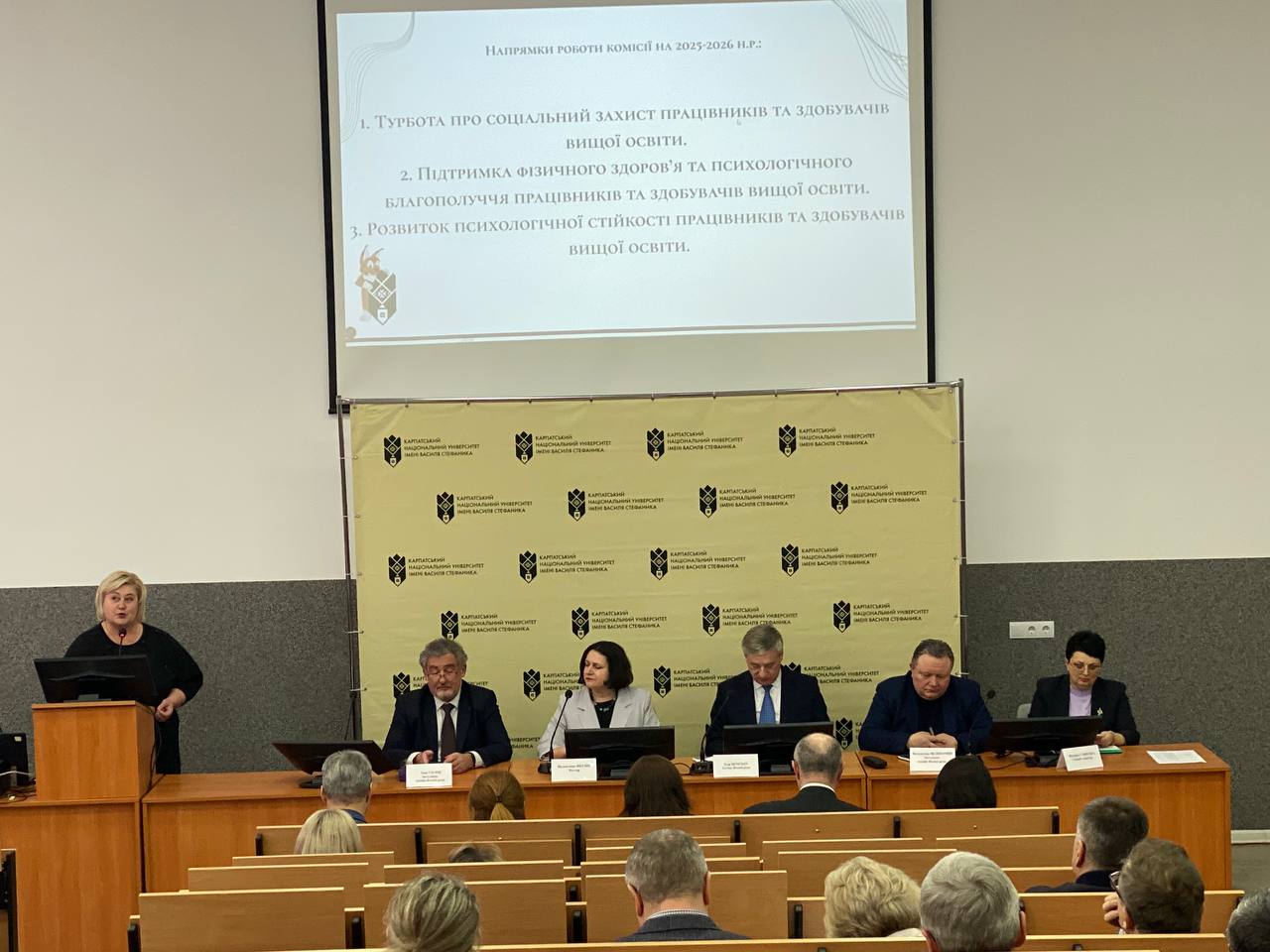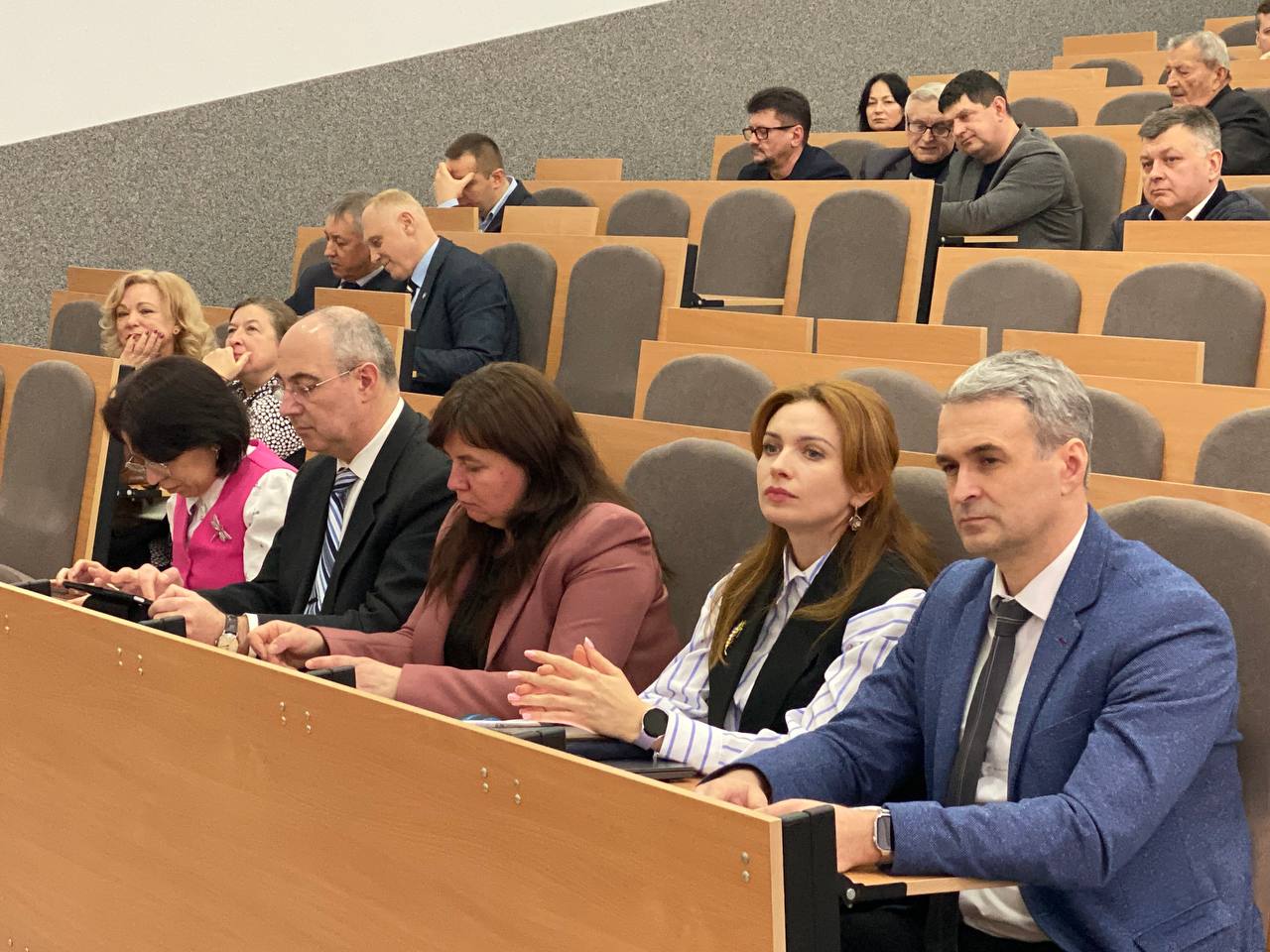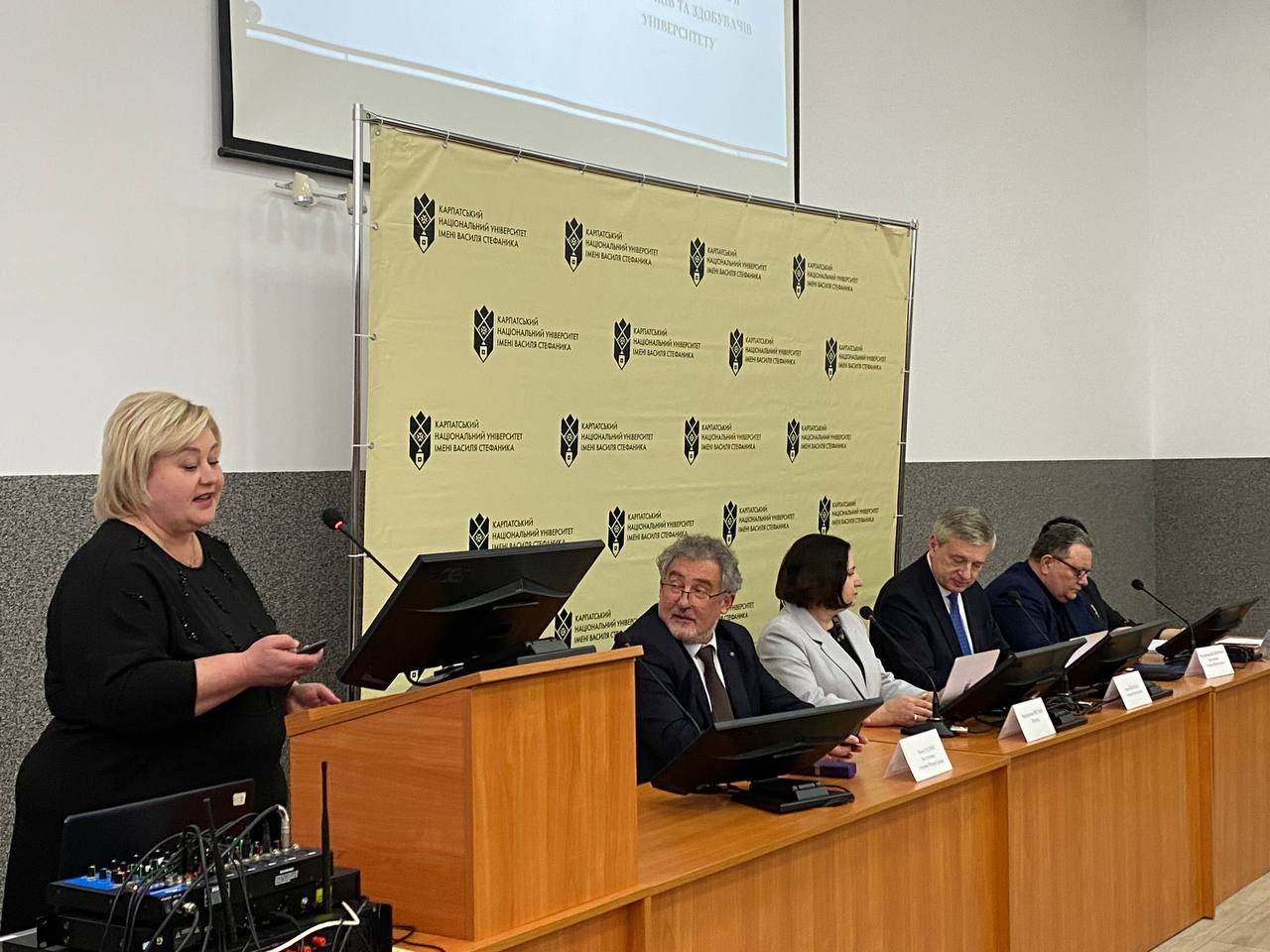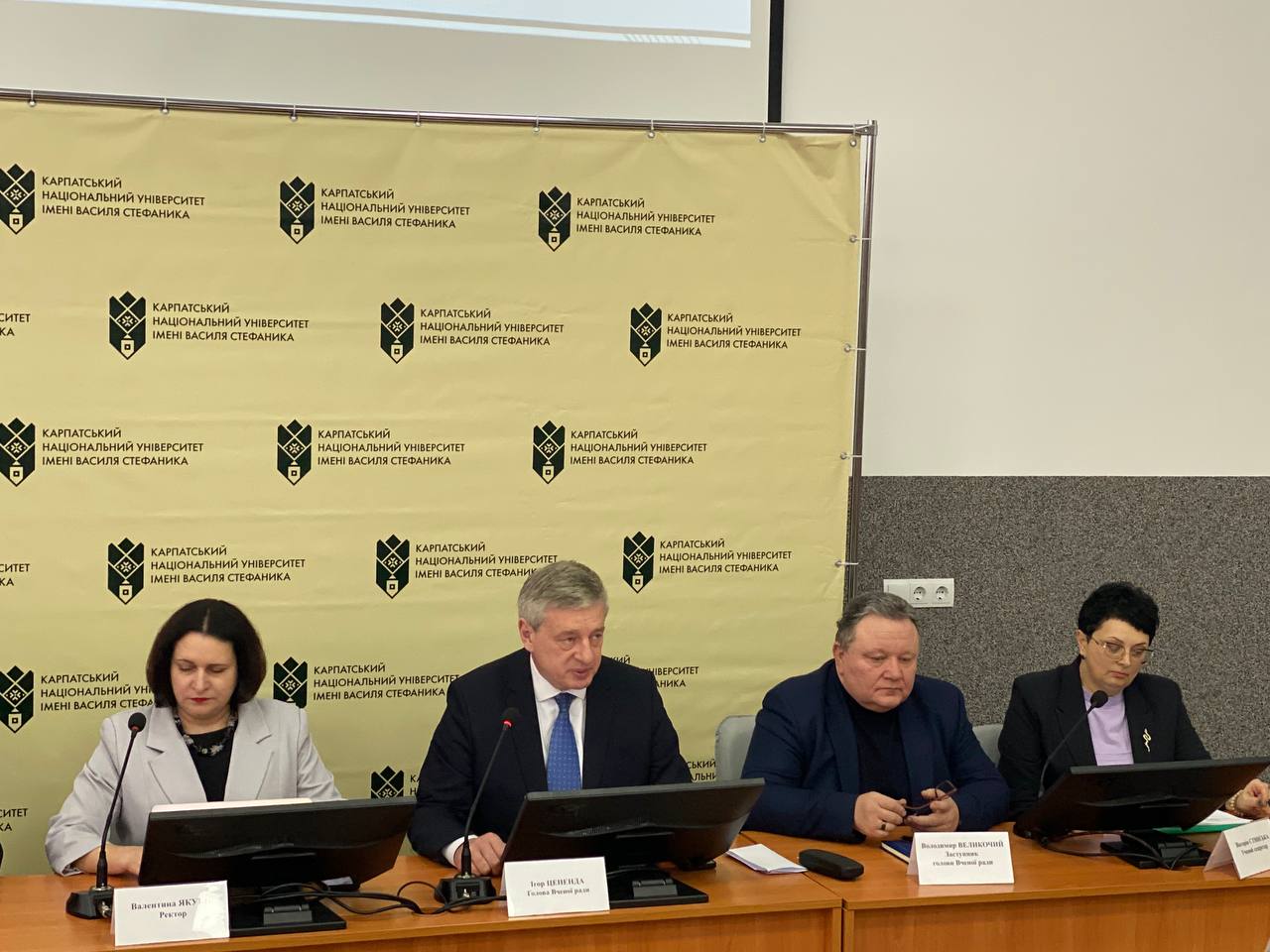
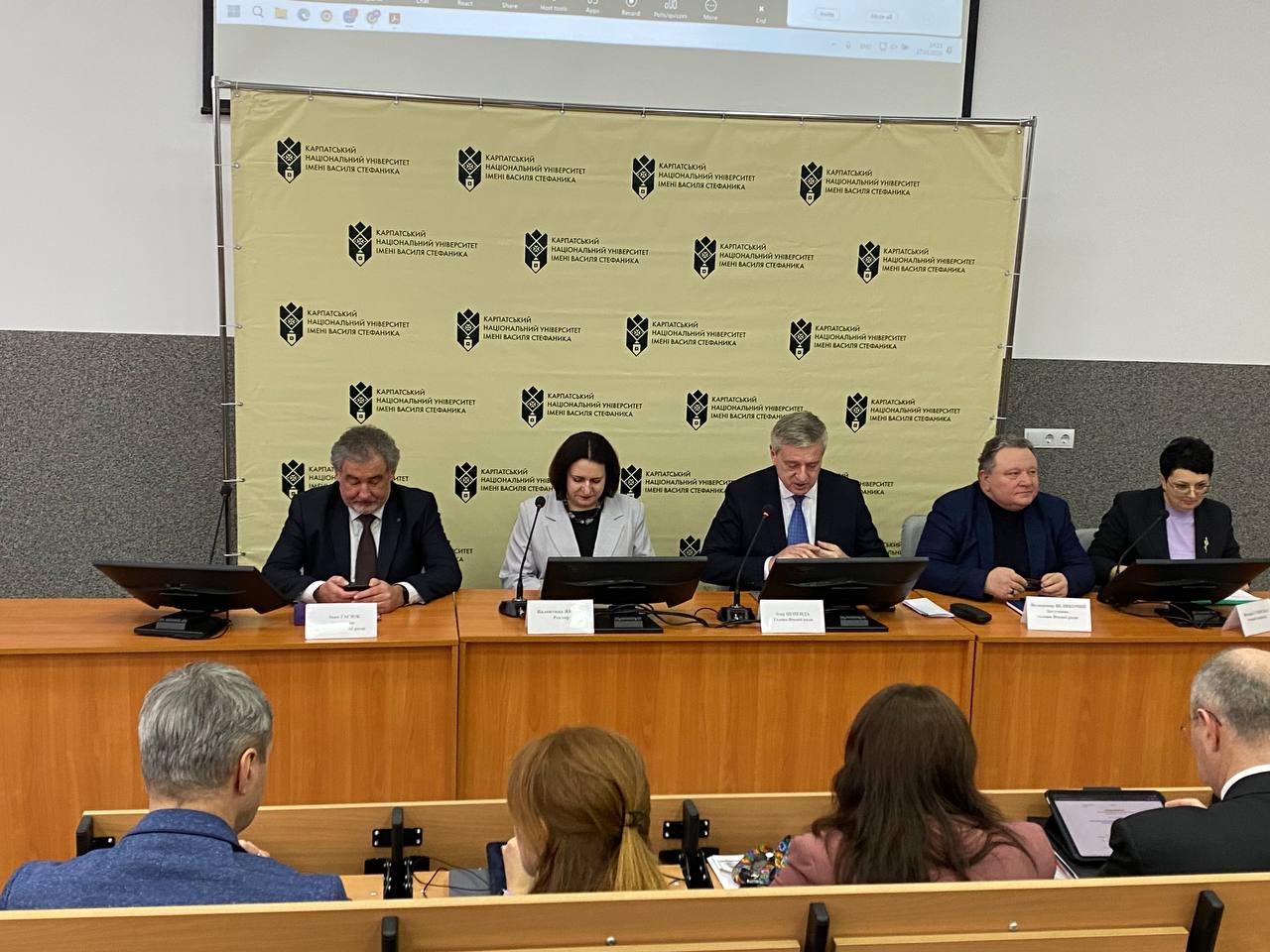
On January 27, the first meeting of the University’s Academic Council in 2026 was held at Vasyl Stefanyk Carpathian National University, chaired by the Academic Council’s Chairman, Professor Ihor Tsependa. It began with a consideration of one of the most pressing issues of today – preserving the mental health of the university’s employees and higher education students.
The report was delivered by the head of the commission on social security and cultural development of employees and students of higher education, Professor Lyubomyra Piletska, who emphasised the importance of systemic support for participants in the educational process amid the long-term challenges posed by wartime.
The Chairman of the University’s Academic Council, Ihor Tsependa, emphasised that the issue of the university community’s psychological resilience is a component of the institution’s overall development strategy.
Within the agenda, the members of the Academic Council also considered: the results of the activities and prospects for the development of the University’s Student Senate (report by the Head of the Student Senate, Victoria Savchyn); the issue of recommendations for admission to postgraduate and doctoral studies in 2026; recommendations for students to participate in competitions for receiving personal and academic scholarships; nomination of scientific and pedagogical workers for departmental incentive awards of the Ministry of Education and Science of Ukraine and the university; recommendations for receiving national and international awards in the field of humanities and arts.
The Academic Council of the University adopted decisions on: updating the composition of the Academic Council commissions; recognizing the results of internships and self-education; awarding academic scholarships to postgraduate students; granting and extending academic and creative leaves; approving and clarifying the topics of dissertation research; creating one-time specialized academic councils; granting official status to scientific circles; organizational changes in the university structure; expanding the licensed scope of educational activities; approving the University Regulations and amendments to them.
The Academic Council meeting demonstrated the university’s strategic attention to both the quality of the educational process and scientific activities, as well as to the human dimension of education – the safety, support, and psychological stability of the university community.