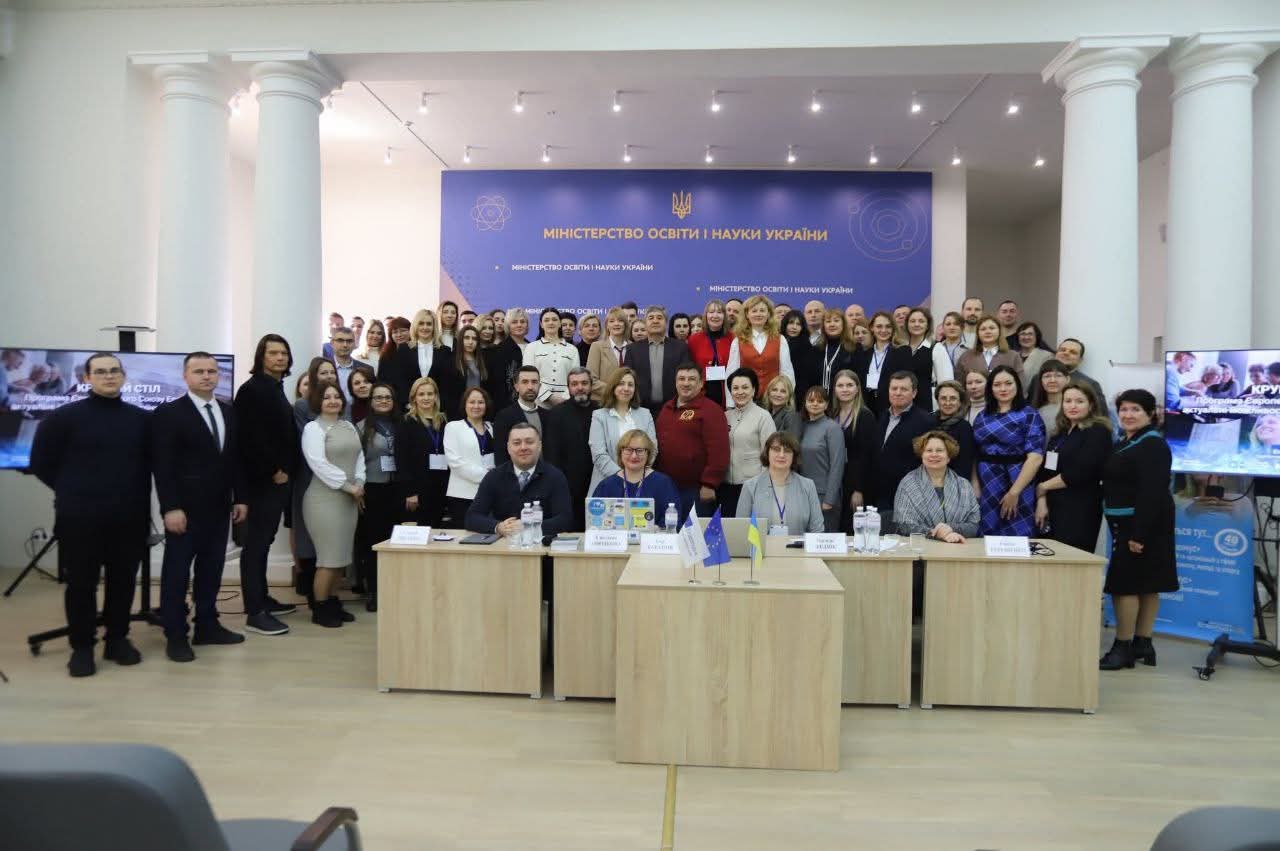
An information and consultation event dedicated to the current opportunities of the EU Erasmus+ Program was held in Kyiv, which was attended by Tetyana Solodzhuk, Head of the University’s Project Management Department.
The event discussed the following topics: national priorities in the field of education for participation in Erasmus+ competitions in 2026; Ukraine’s path to associated involvement in the EU Erasmus+ Program and key institutional steps; implementation of international technical assistance projects, the beneficiary of which is the Ministry of Education and Science of Ukraine; the work of the Eurydice information system and the role of national EQF, Europass, Euroguidance, Eurodesk centers; results of Ukraine’s participation in the Horizon Europe Program, current challenges and prospects.
In the afternoon, a round table “European Union Erasmus+ Program: Current Opportunities for Ukrainian Participants” was held, during which the features of the 2026 Erasmus+ competitions, the conditions for participation of students and employees of higher education institutions in academic mobility, institutional aspects of preparation for Ukraine’s associated membership in the Erasmus+ Program (in particular, compliance with the provisions of the Erasmus+ Charter for Higher Education – ECHE), as well as issues of inclusiveness and international academic diplomacy were discussed.
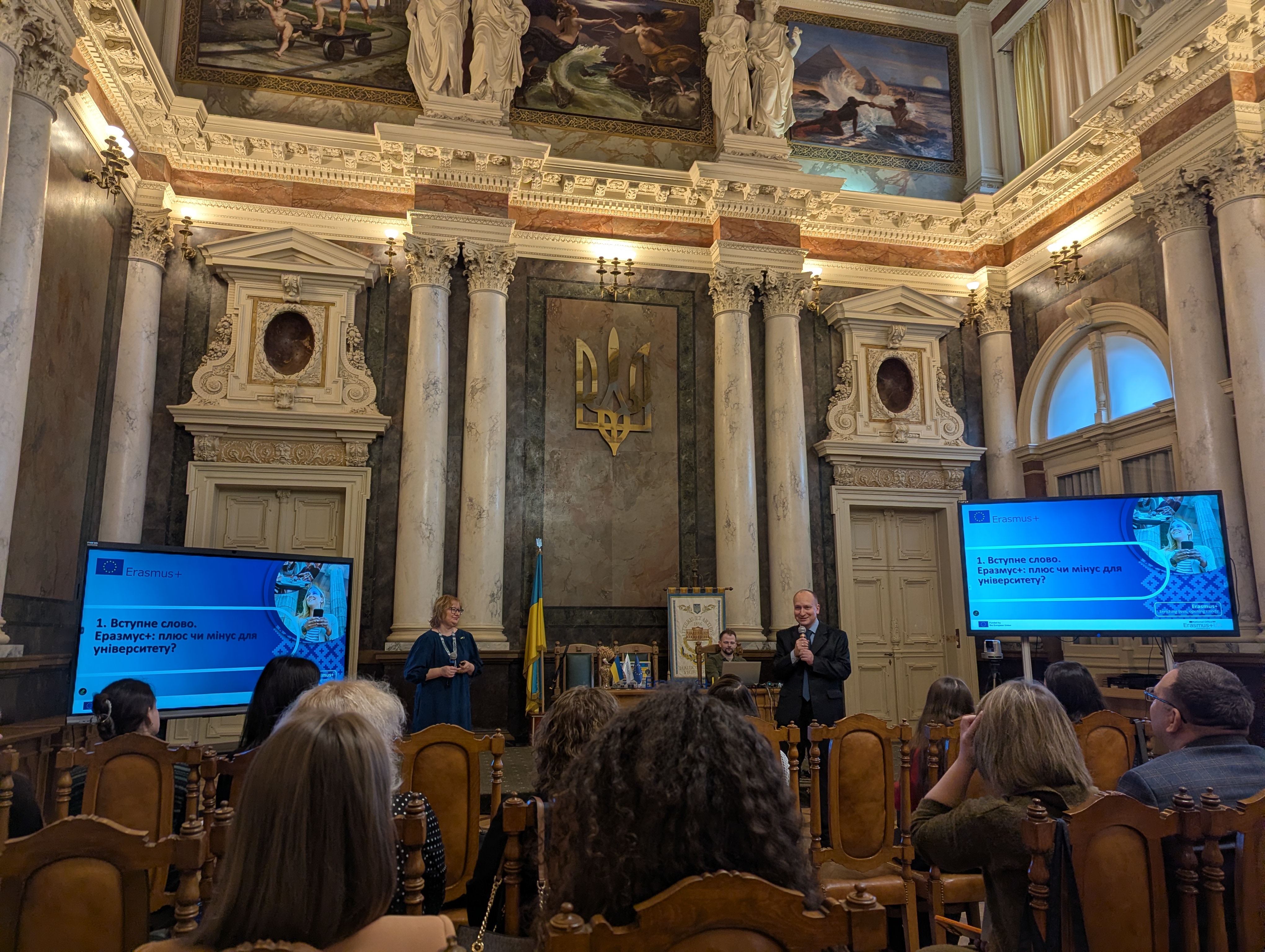
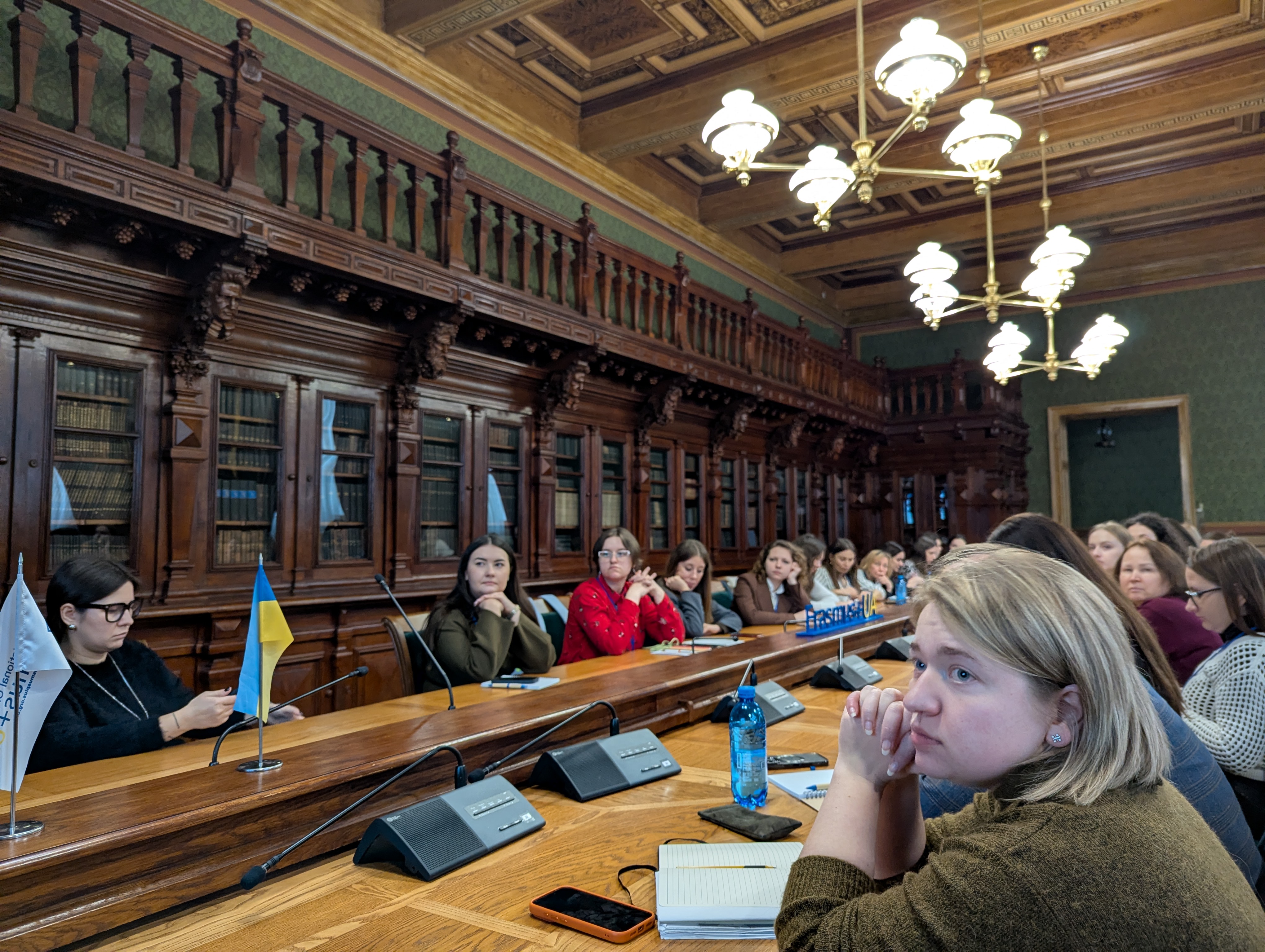
Tetyana Solodzhuk and Nadiya Klykaylo, the leading specialists of the department, also participated in a specialised training of the National Erasmus+ Office in Ukraine, which was held in the city of Lviv.
The training covered issues related to the specifics of institutional coordination of Erasmus+ projects; competition results and Program opportunities; formation of international professional networks and events; visualisation and dissemination of information about project activities and results; establishing cooperation with partners, quality assurance and reporting; challenges of implementing projects during martial law and ways to overcome them.
As part of the practical tasks, they participated in teamwork and described the full cycle of international academic mobility projects, from preparation to implementation, and also considered the practical aspects of working with institutional Erasmus+ coordinators.
Representatives of the National Erasmus+ Office in Ukraine, Svitlana Shytikova and Kateryna Zhdanova, conducted the training. The report by Natalia Butych, Regional Coordinator Eastern Europe of DAAD programs (Leibniz University Hannover), was interesting, as it provided an understanding of the specifics of involving foreign universities as partners within projects.
Participation in these events contributed to deepening practical and strategic knowledge in the field of Erasmus+ project management, exchanging experiences with other higher education institutions, and forming a clear vision of further steps in the development of the university’s project activities.