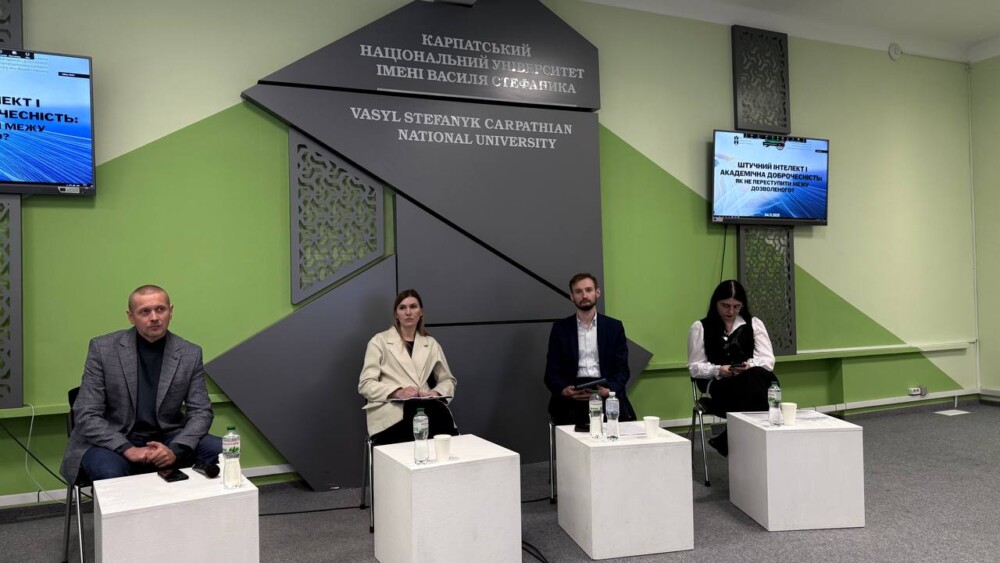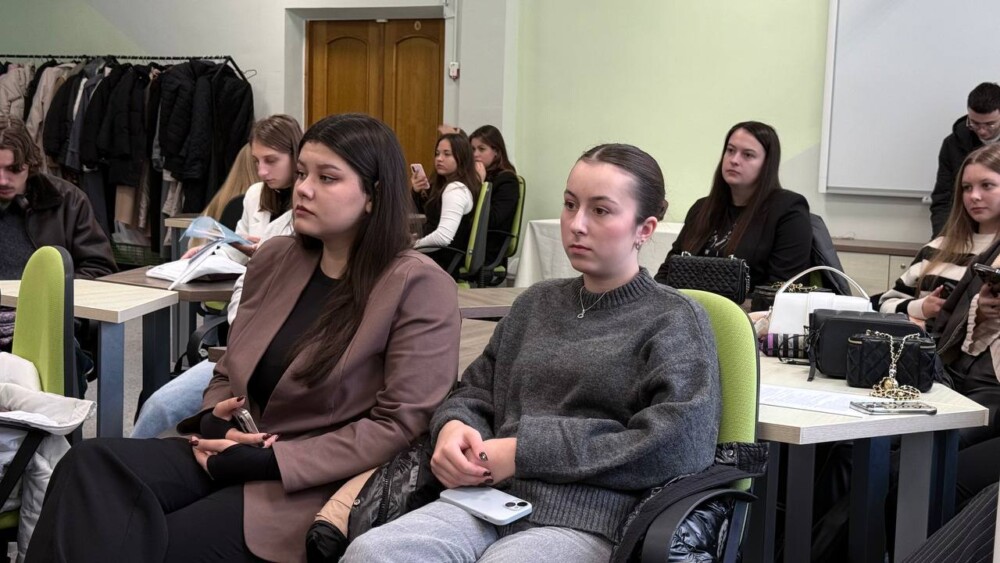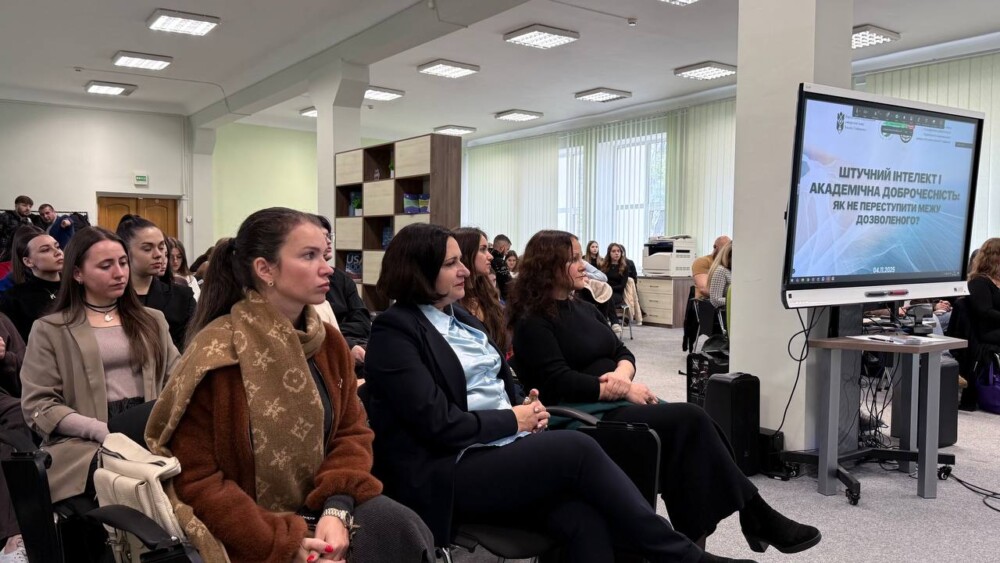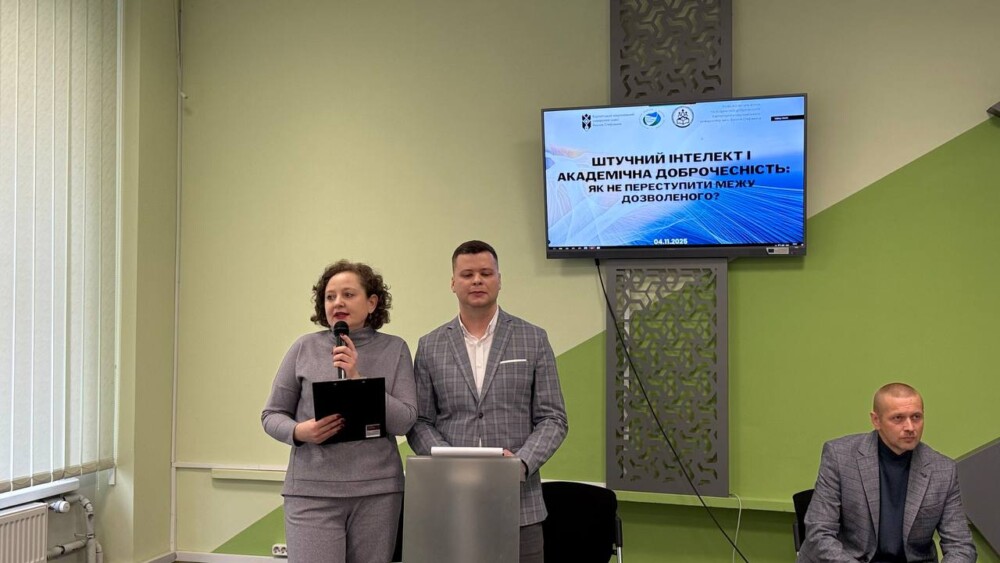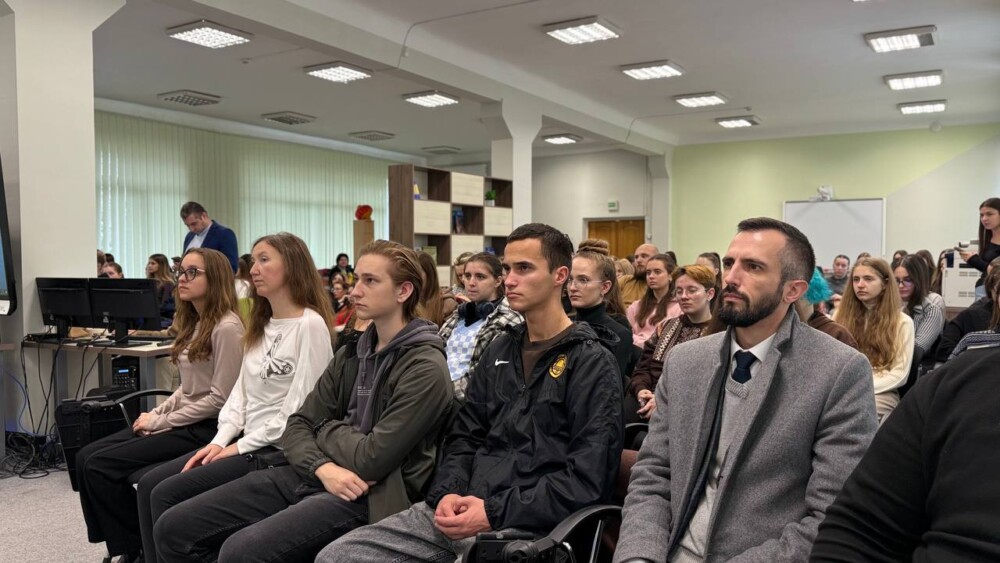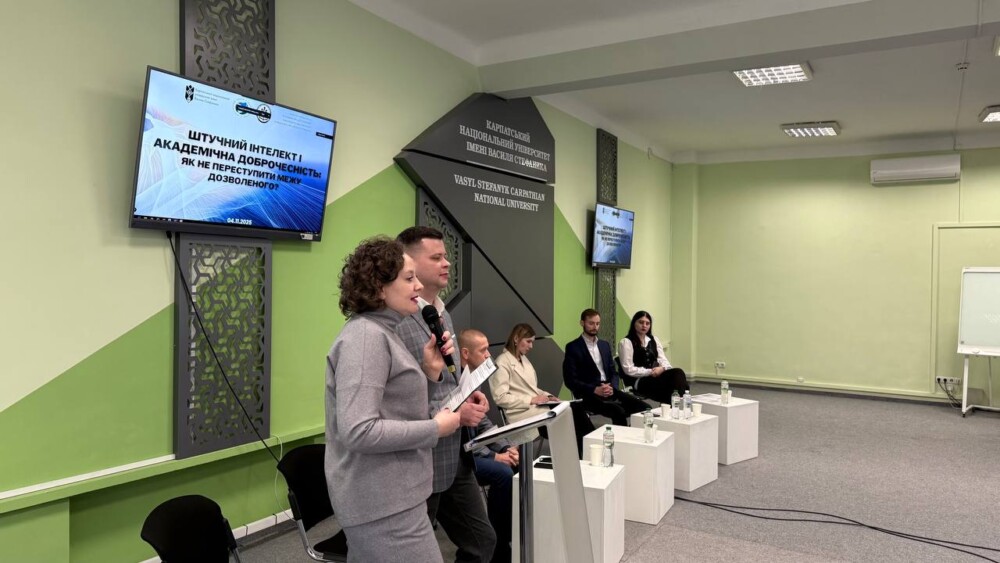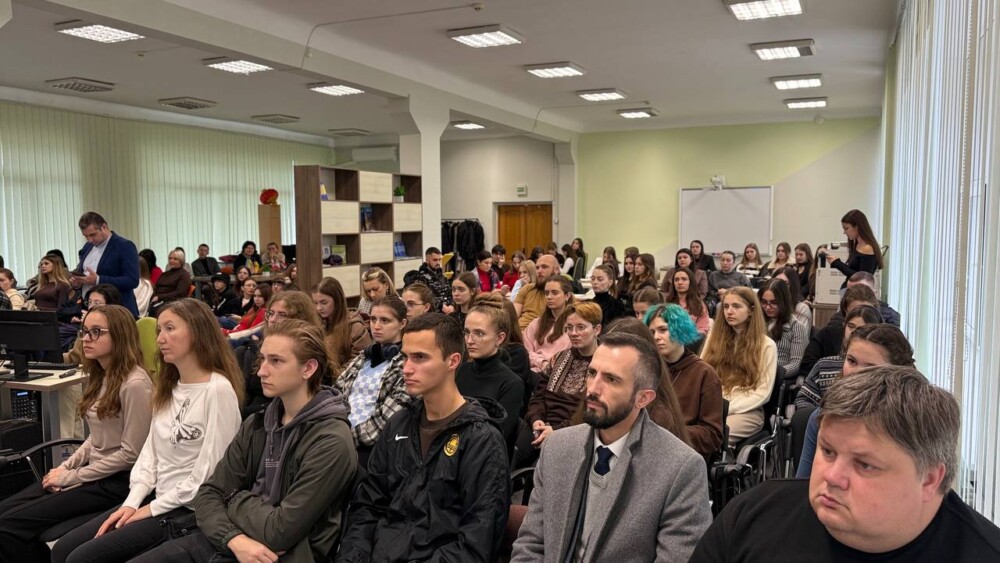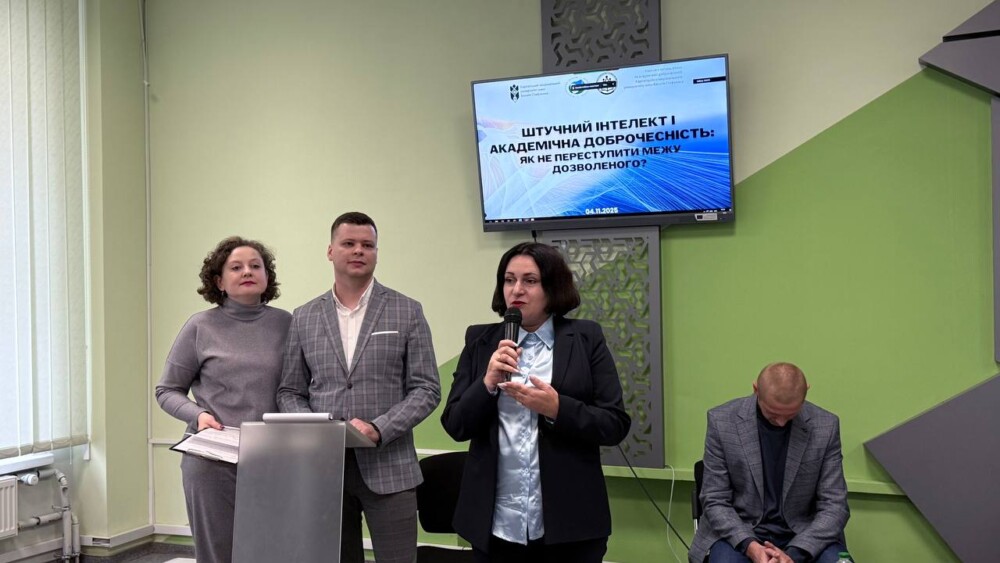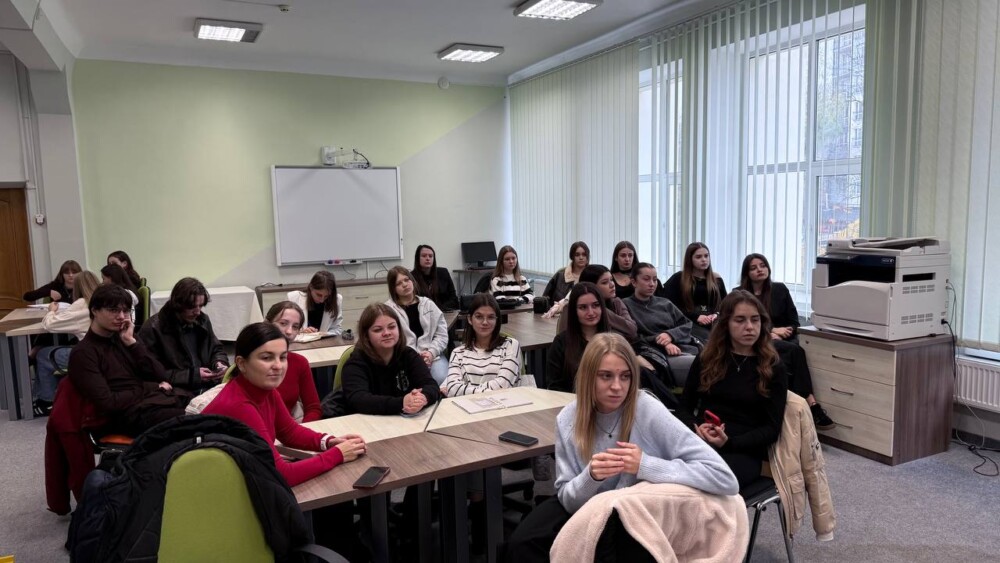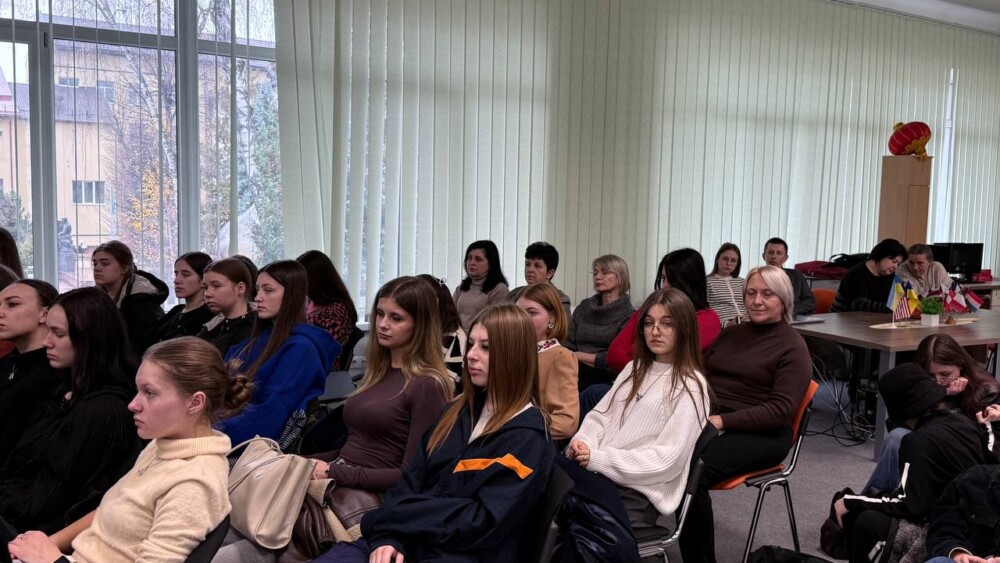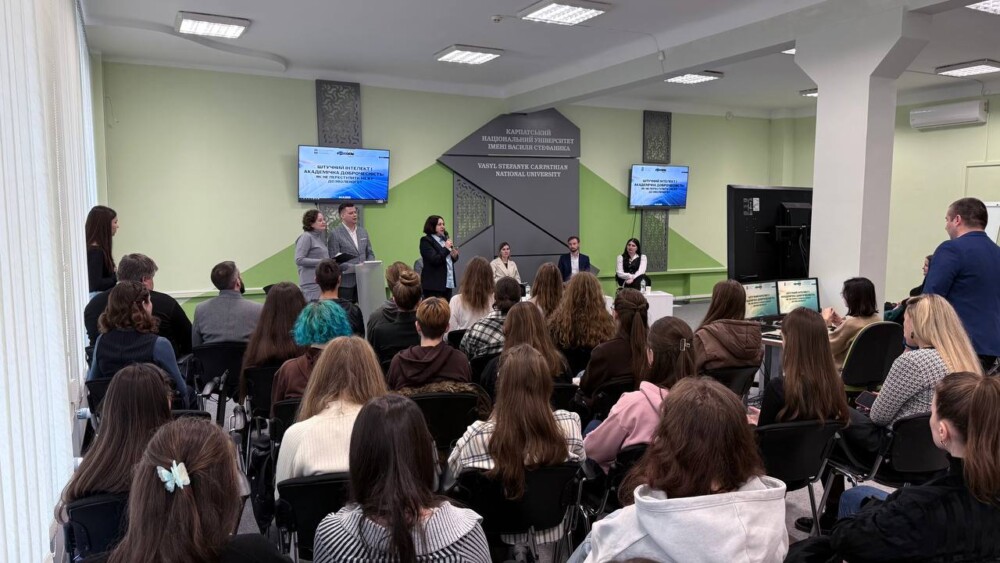
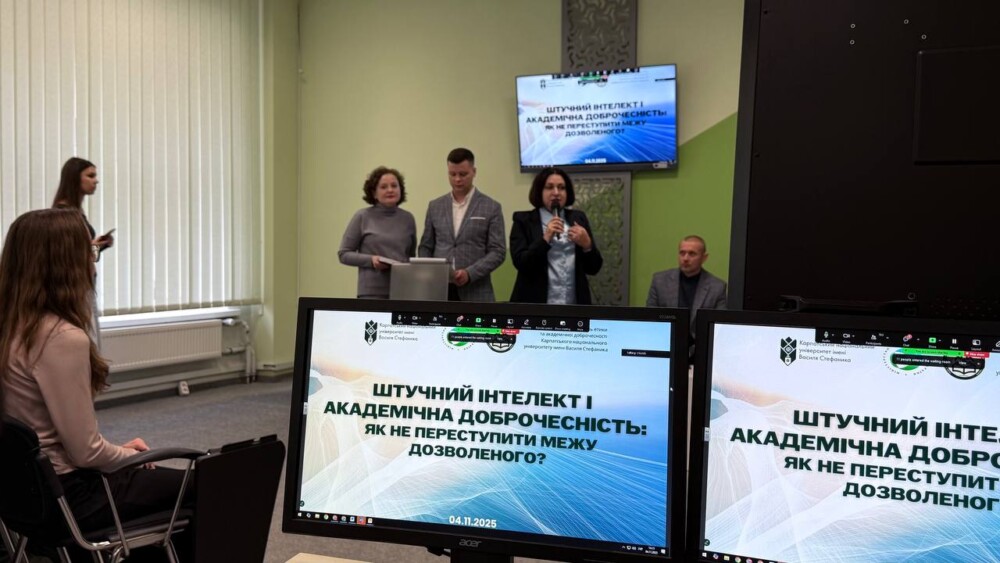
On November 4, the training session “Artificial Intelligence and Academic Integrity: How Not to Cross the Line of Permissibility?” was held at Vasyl Stefanyk Carpathian National University, focusing on the modern challenges of utilising artificial intelligence technologies in education and science.
The event was held in a mixed format. There were over 1,500 participants from all over Ukraine.
The training was moderated by:
– Taras Paska, Chairman of the Council for Research Work of Students, Postgraduate Students and Young Scientists of Carpathian University, Doctor of Philosophy, Assistant Professor of the B. Stuparyk Department of Pedagogy and Educational Management, Member of the Council of Young Scientists at the Ministry of Education and Science of Ukraine;
– Natalia Kokhan, Head of the Commission on Ethics and Academic Integrity of Carpathian University, Candidate of Law, Associate Professor of the Department of Labour, Environmental and Agrarian Law.
The following addressed the participants with welcoming remarks:
– Valentyna Yakubiv, First Vice-Rector of Carpathian University, Doctor of Economics, Professor;
– Anastasia Simakhova, Head of the Council of Young Scientists under the Ministry of Education and Science of Ukraine, Doctor of Economic Sciences, Professor.
In their speeches, they emphasised the relevance of the topic of academic integrity in the context of the rapid development of artificial intelligence. They highlighted the importance of fostering a responsible digital culture among students and young researchers.
During the event, participants had the opportunity to listen to several informative presentations:
- Maksym Yatsyna, Doctor of Philosophy (PhD) in speciality 081 Law, senior lecturer at the Department of Crime Control Policy and Criminal Law of the Kyiv National University of Internal Affairs, spoke on the topic “Normative Aspects of the Application of AI in Education and Science”;
- Tetyana Kornienko, the rector’s authorized representative for digitalization, head of the document management and office management department of the KNUVD, presented the report “Artificial Intelligence in Scientific Research: Between Innovation and Responsibility. University Regulations on the Use of AI”;
- Roman Dzumedzei, Director of the Scientific Library, Candidate of Physical and Mathematical Sciences, Associate Professor of the Department of Physics and Astronomy of the KNUVS, spoke about “AI in scientific works: how direct use is detected and assessed”;
- Olga Gandera, a teacher at the Ivano-Frankivsk Vocational College, a leading specialist at the Information and Computing Center of the KNUVS, presented “Practical AI-based tools for researchers.”
The training participants discussed the risks and opportunities of using AI in the educational environment, exchanged experiences, and received practical advice on the ethical use of innovative technologies in scientific activities.