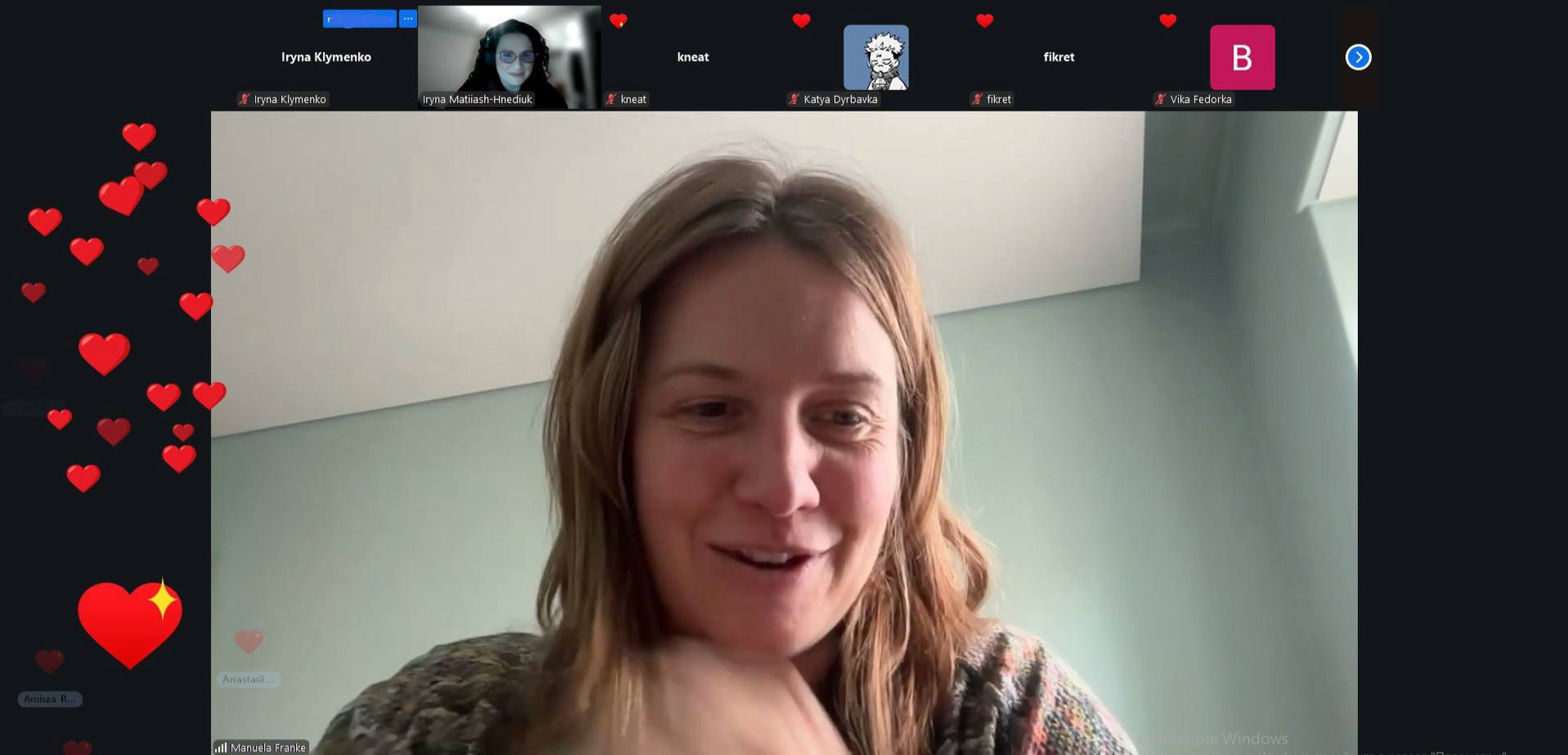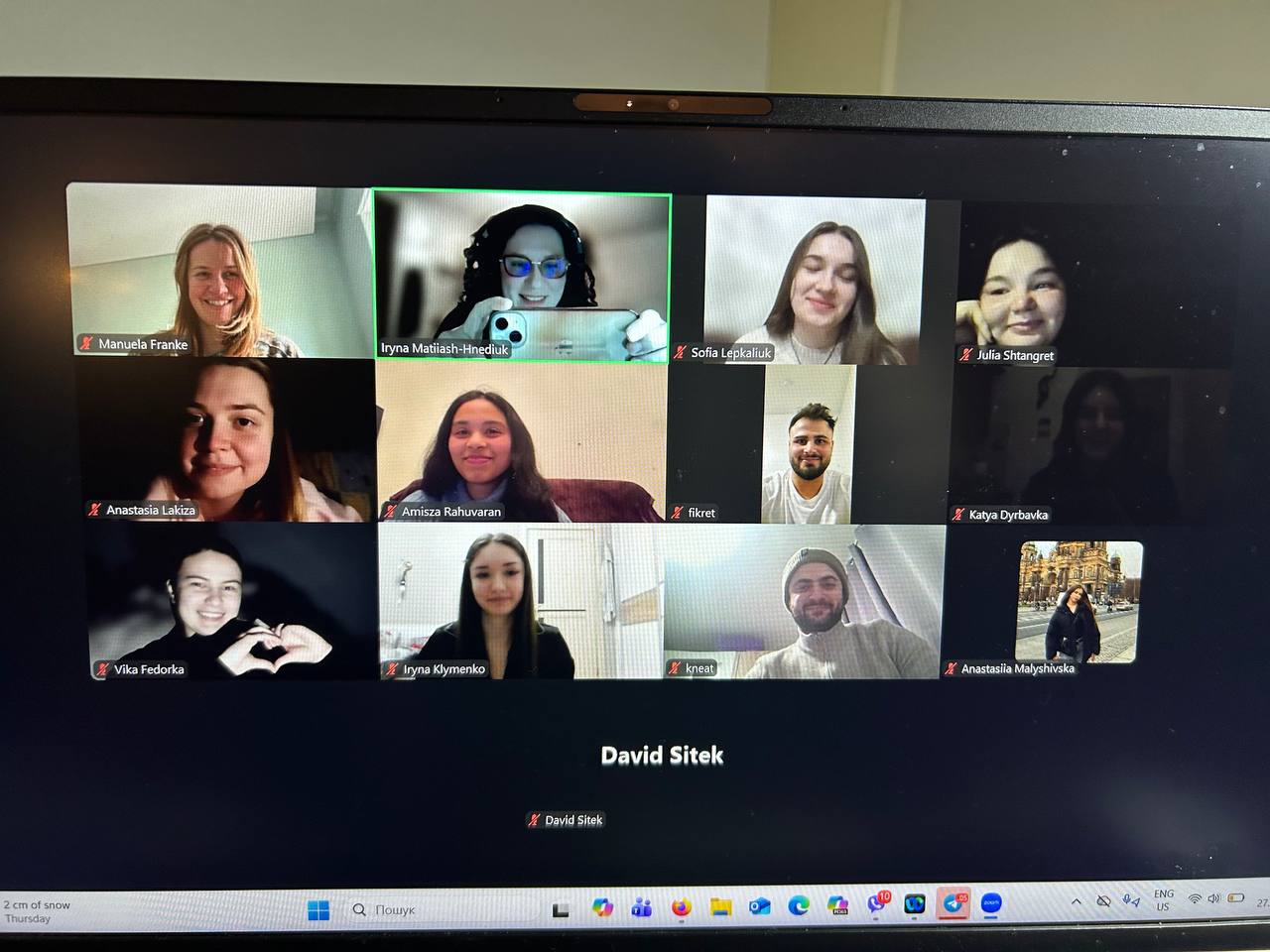
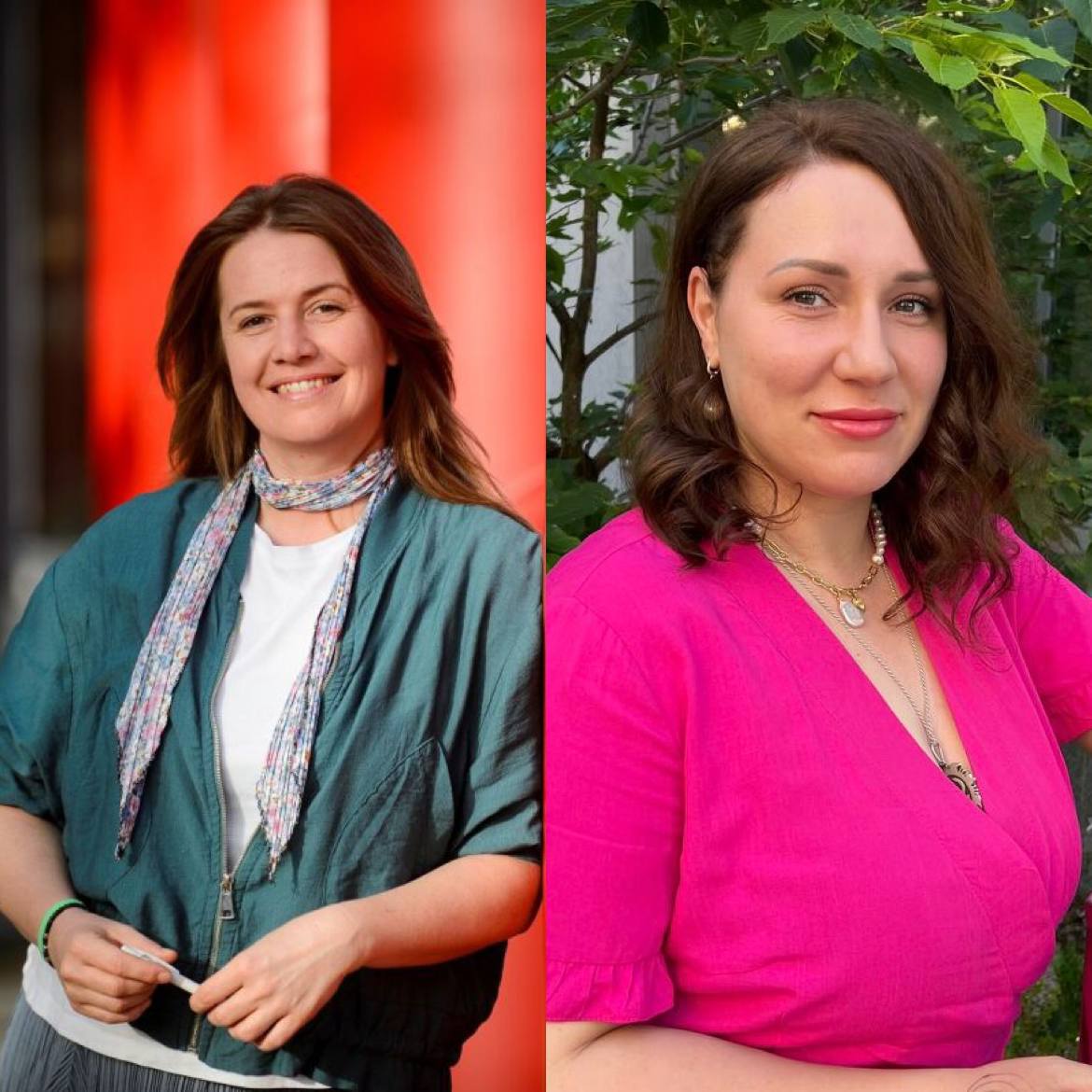
As part of the international cooperation between Iryna Matiyas-Hnedyuk, Associate Professor of the Department of English Philology, and Dr Manuela Franke, Professor of the University of Duisburg-Essen, the COIL project “Becoming a Foreign Language Teacher: Ukrainian and German Perspective” was implemented.
The project lasted from November 2025 to January 2026 and brought together students from Vasyl Stefanyk Carpathian National University and the University of Duisburg-Essen.
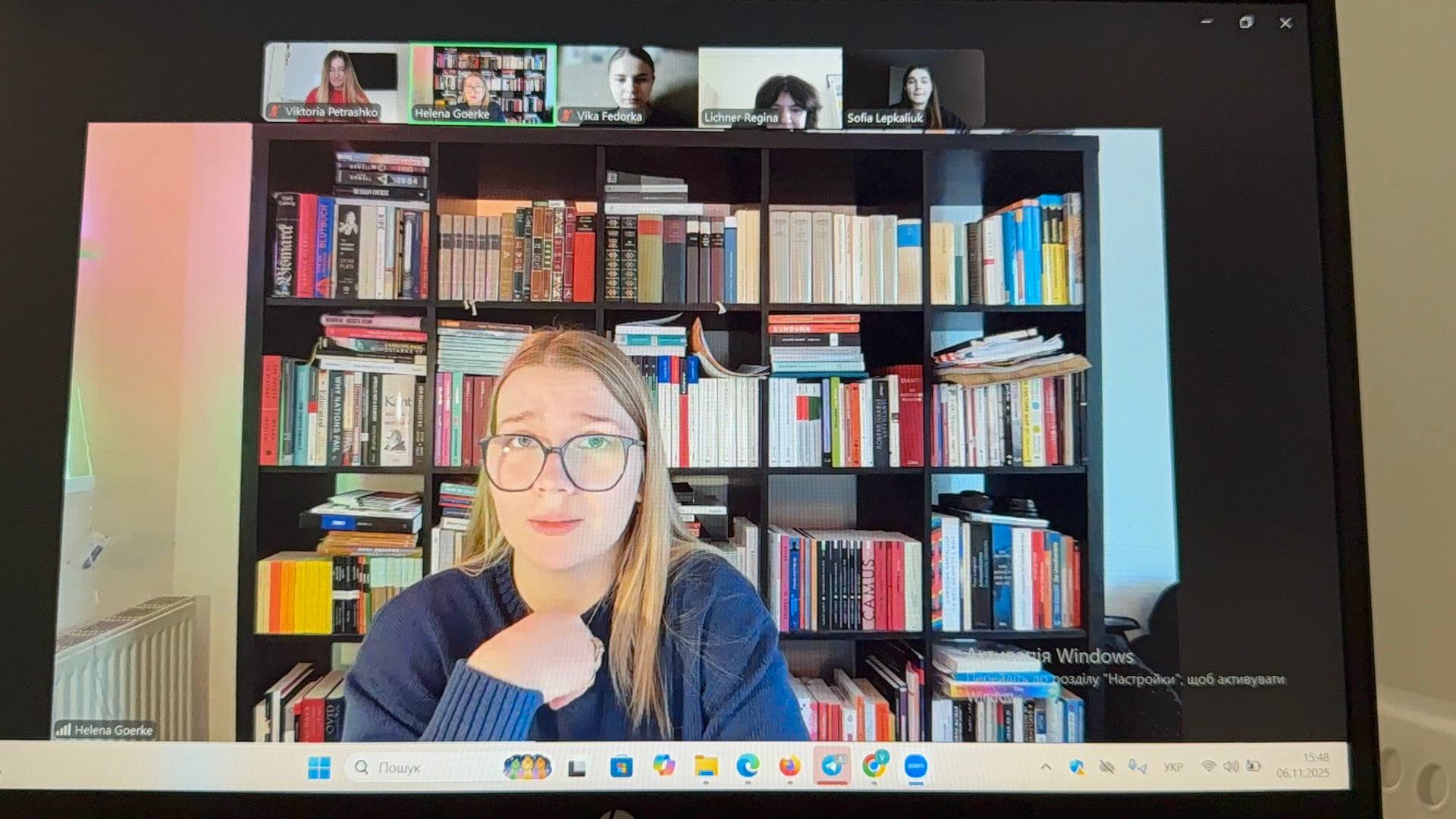
Four online meetings were held within the COIL project. The first one — an orientation and introductory one — was dedicated to getting to know the students and presenting the educational programs of both universities. During the second meeting, participants focused on training foreign language teachers in Germany and Ukraine. The students analysed the requirements for education, the procedures for obtaining qualifications, and also discussed the standard features and differences of the two educational systems.
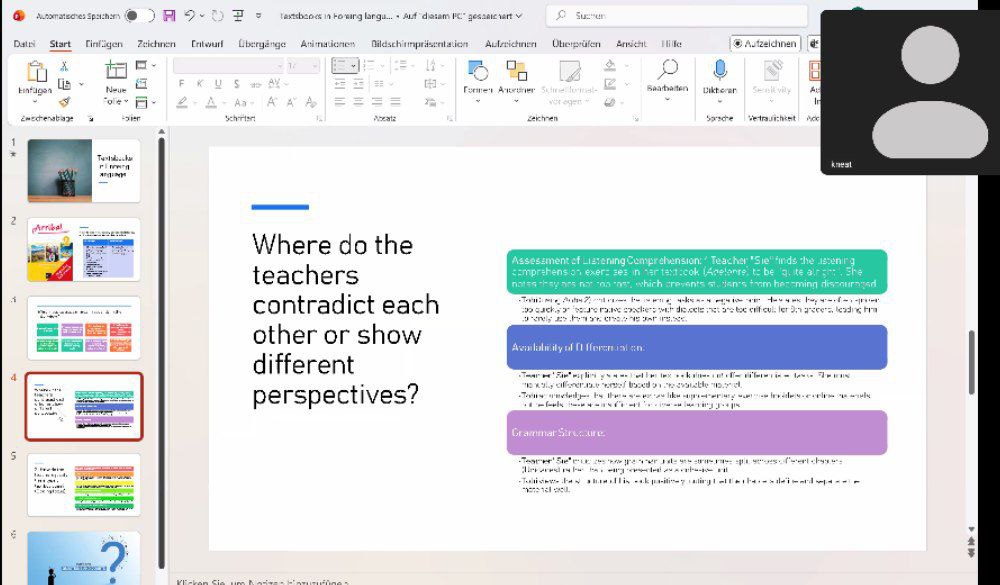
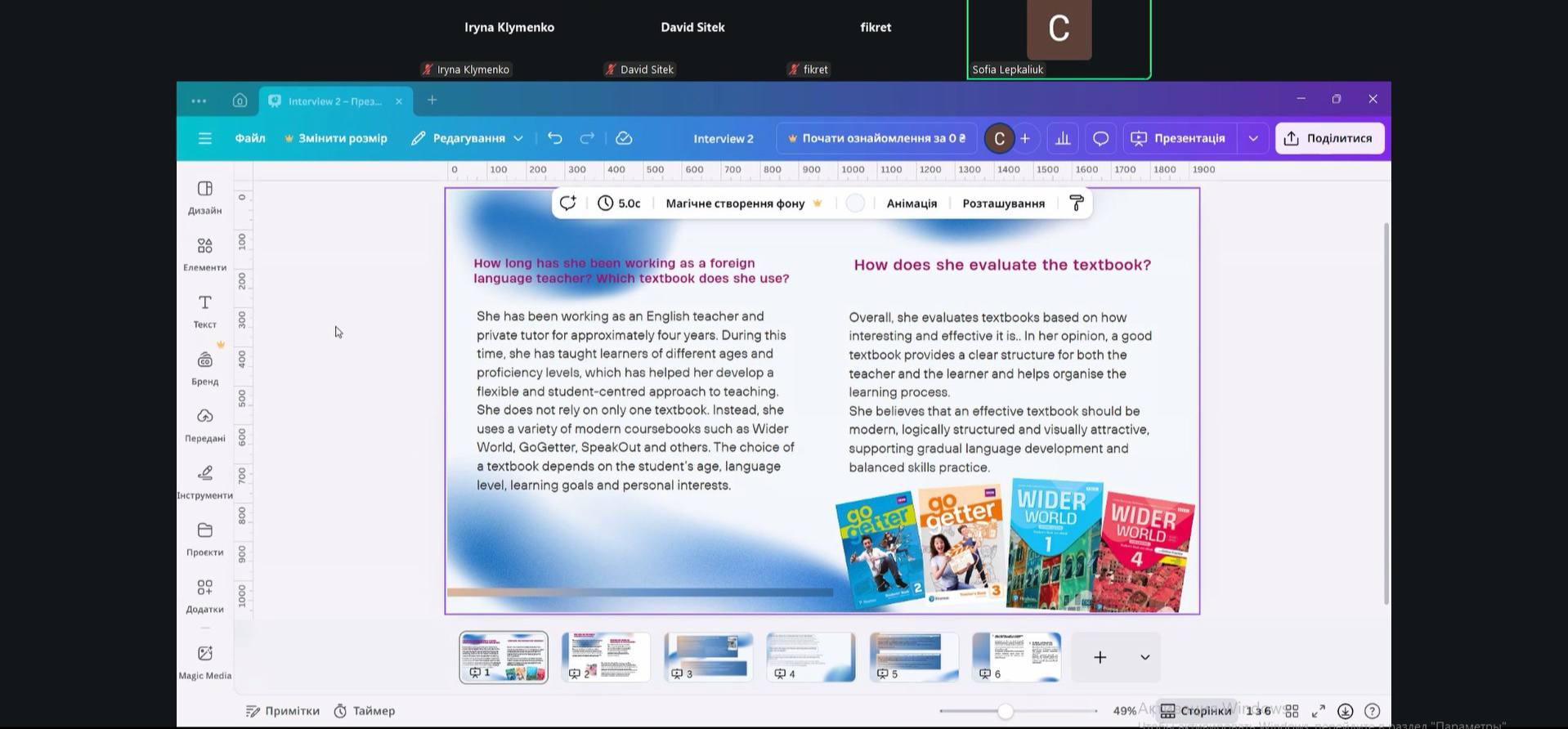
The third session was devoted to the analysis of textbooks and teaching aids for the study of foreign languages in schools. Each participant presented the results of their own analysis and reasonably outlined the advantages and disadvantages of the chosen textbook. The final meeting included a discussion of the interviews that the students conducted with foreign language teachers in schools. It was the live conversations with practising teachers that became one of the key features of this COIL project, giving the research an applied and authentic character.
Intercultural interaction was also an essential component of the project: students of Carpathian University had a unique opportunity to collaborate with students studying Spanish, which significantly expanded their intercultural and methodological experience.
The project participants highly appreciated the experience gained.
Anastasia Lakiza noted: “Collaborating with German students showed me that, despite cultural differences, we are united by a common desire for knowledge. This experience proved that education can truly unite people.”
Yulia Shtangret shared her impressions: “Open communication, discussion of cultural differences, and authentic language practice made this experience special. As our teacher said, we ‘shared life,’ and that was the most important thing.”
David Sitek emphasised: “Participating in the project helped me to gain a deeper understanding of what it means to be a teacher and to understand that teaching requires much more responsibility, communication, and planning than just teaching.”
Victoria Fedorka noted the practical value of the work: “It was interesting to see different educational trajectories and approaches to working with textbooks. This experience is beneficial for my future as an English teacher.”
Iryna Klymenko added: “The project provided an opportunity better to understand the German education system, student life, and compare it with the Ukrainian one. In addition, live English communication helped increase confidence and improve language skills.”
The COIL project has become an example of practical international academic cooperation aimed at developing the professional identity of future foreign language teachers and fostering students’ intercultural competence.